
On this page11 sections
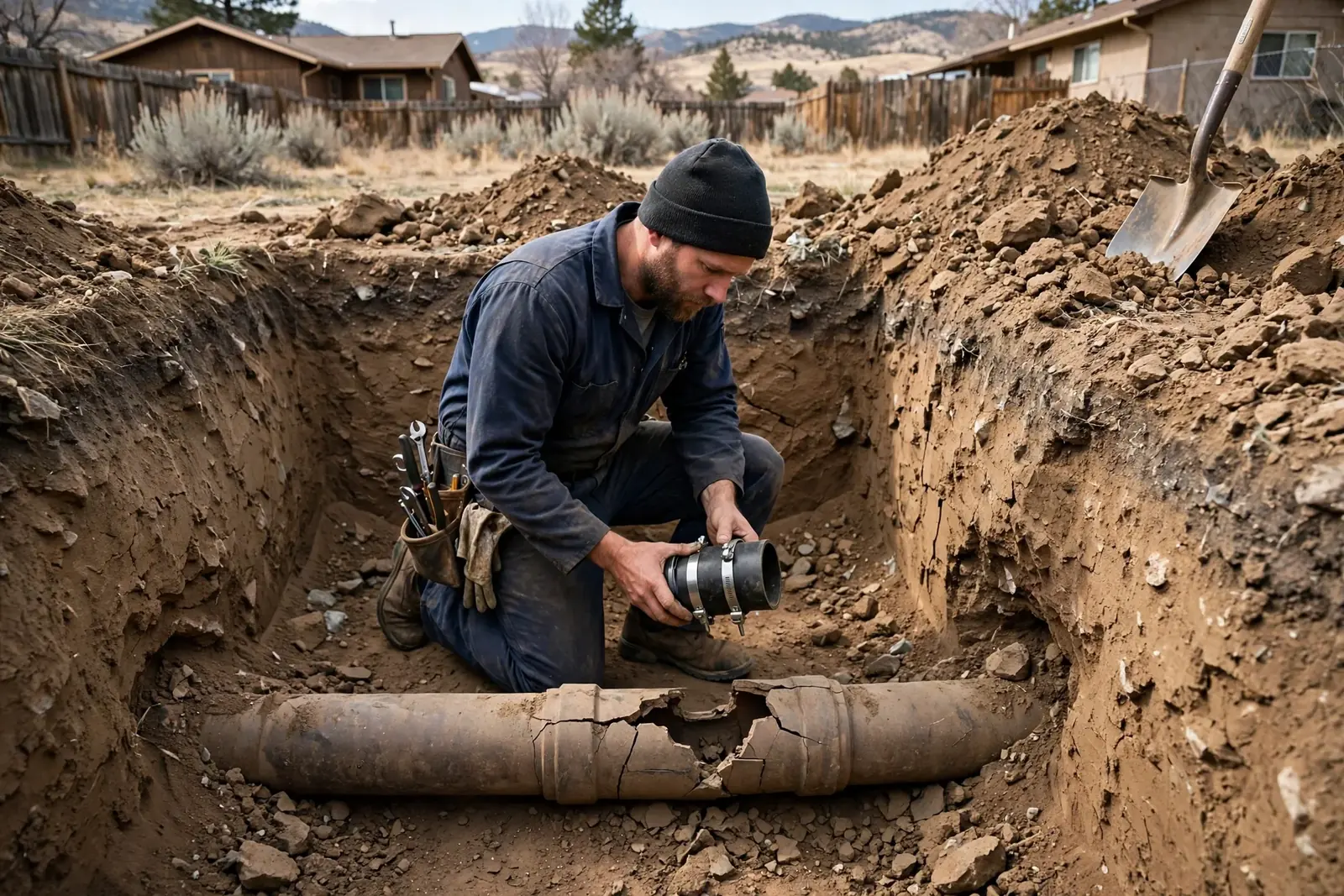
We find that section on camera and fix it, in the yard, under the basement floor or in a crawlspace. Call (888) 888 8888 for a scope and a straight answer.
Types of Pipe Damage We Repair
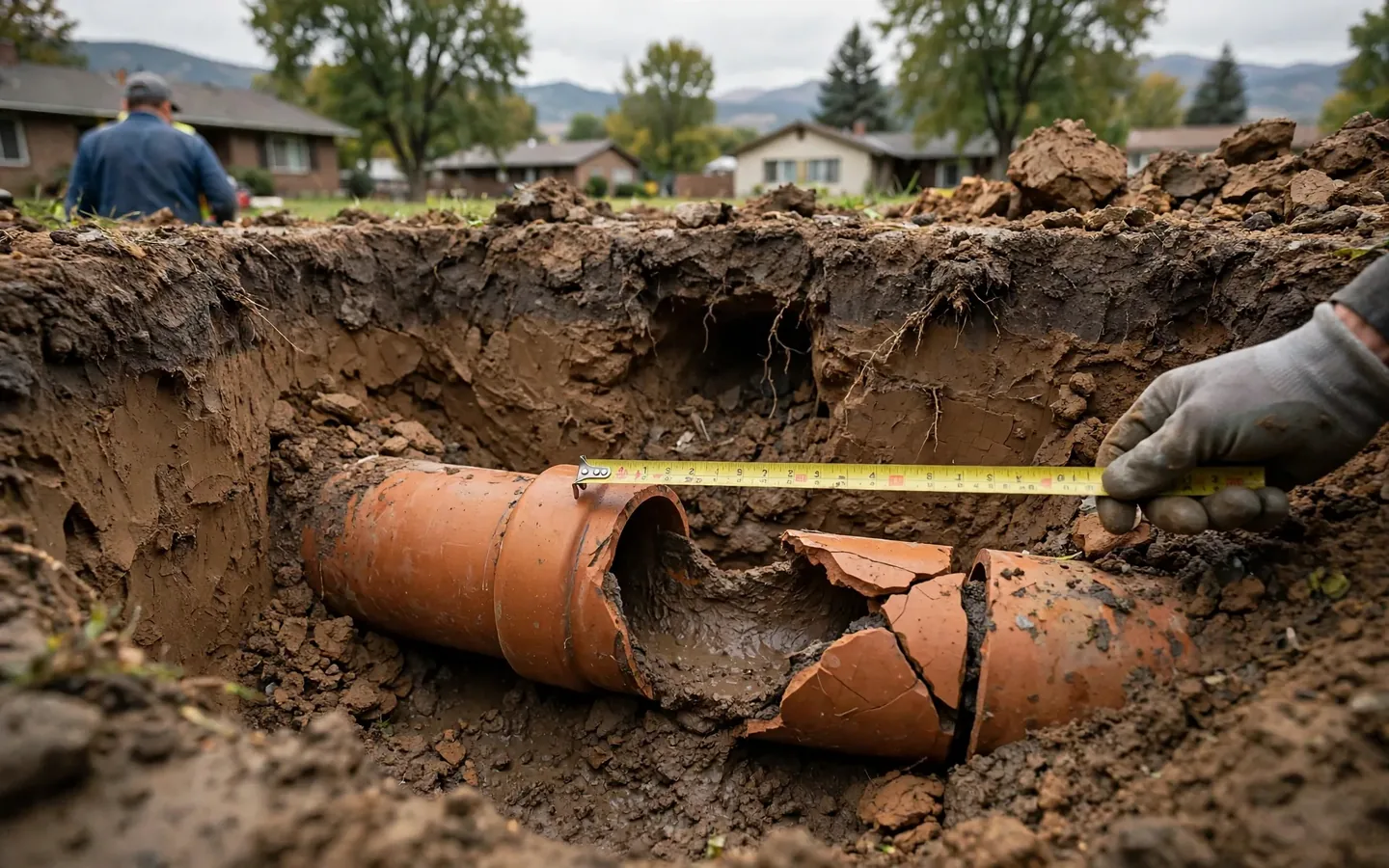
- Cracks and fractures. Clay and cast iron crack under soil pressure. Small cracks let roots and groundwater in.
- Offsets. One section shifts so its edge sticks into the flow. Paper and waste catch on that lip.
- Separations. Two sections pull apart, letting sewage leak into the soil.
- Collapses. The pipe caves in and blocks flow, common with old Orangeburg.
- Corrosion holes. Cast iron rusts from the inside until the bottom wears through.
Why Pipes Break in Littleton
Swelling clay soil. The Colorado Geological Survey maps swelling clay under the major Front Range cities. Clay grows when wet and shrinks when dry, pushing buried pipe out of line.
Spring moisture. Snow can fall from October into May, and spring melt plus May storms soak the ground just as the soil starts to move.
Old materials. Clay joints, cast iron and Orangeburg in homes built before the 1980s.
Tree roots. Roots widen small cracks over time.
Breaks Under the House
What happens when a sewer pipe cracks under the basement slab?
Sewage leaks into the soil beneath the basement floor or slab. You may notice a sewage smell, damp floor spots, slow drains or repeat backups, and over time the leak can affect the soil under the foundation.
How to fix a broken sewer line under the house?
Find the exact break on camera, then choose the least invasive repair: a liner through the cleanout if the pipe holds its shape, or opening the floor only over the damaged section if it does not.
We mark the break from above with a locator so any floor cut is small and exact.
Crawlspace Sewer Pipe Repair
Some Littleton homes have a crawlspace instead of a full basement, with the building drain hanging below the floor. Leaks and drips there are often at an old cast iron joint or a cracked fitting. We replace the failed section with new pipe and proper supports, then test it.
How We Repair a Broken Section
- Camera scope to find the break and anything else wrong with the line
- Locate and mark the spot and depth from the surface
- Colorado 811 locate before any digging, as state law requires
- District permit, since work that reaches the street needs a City right-of-way permit
- Spot repair: cut out the failed section and couple in new pipe, or line the damaged length
- Final video to confirm the fix and check for other weak spots
Can a sewer line be repaired in just one spot?
Yes, when the camera shows the damage is limited to one area and the rest of the pipe is sound.
If the camera shows breaks spread along the whole line, a full replacement will last longer than a string of spot repairs.
Where We See Broken Pipe Most
- Historic Downtown Littleton (80120): older clay and cast iron near Main Street and Littleton Boulevard
- Columbine Hills and Columbine West (80123, 80128): 1960s and 1970s homes on clay pipe
- Cherry Knolls (80121): root damaged clay under mature trees
- Highlands Ranch (80126, 80129, 80130): separated PVC joints where soil settled after construction
Signs of a Broken Sewer Pipe
- Repeat clogs in the same spot: the break catches paper and waste each time.
- A soggy or extra green strip in the yard: sewage is leaking into the soil above the pipe.
- Sewer smell outdoors or in the basement: gas escapes through the crack.
- Gurgling toilets and slow drains on the lowest floor: air and water cannot pass the damaged section; see warning signs of a failing line.
- New cracks in a basement slab or a sinking spot in the lawn: soil washes into a broken pipe over time.
How to Prevent It
- Keep wipes, grease and paper towels out of drains, so a weak spot does not become a blockage.
- Scope the line every few years on homes built before about 1980, when clay, cast iron and Orangeburg were common.
- Keep new trees well away from the line and water deeply in dry spells, so roots are not drawn toward pipe joints.
- Fix small cracks early. A spot repair now is far smaller than a collapse later.
What Affects the Cost
Every line is different, so a fair price comes after a camera scope, not before. These are the things that move the number up or down:
- Where the break is: under the yard is simpler than under a basement slab, driveway or street.
- How deep the pipe sits: deeper pipe means a bigger, longer excavation.
- How much pipe failed: one cracked joint is a spot repair; long stretches of damage may call for a liner or a new line.
- Repair method: dig and replace, a sectional liner, or full lining or bursting; see repair or replace.
- Permits and district inspection: work at or near the tap usually needs a district permit.
- Restoring the surface: concrete, landscaping or flooring put back after the work.
Quick Answers
How do I know a pipe is broken and not just clogged? A clog clears and stays clear for a while. A break keeps coming back, causes odors or wet spots, and shows up clearly on camera.
Will you dig up my whole yard for one break? No. We dig one small pit over the marked spot, or none if lining fits.
Can you fix cast iron under the basement floor? Yes, by lining it through the cleanout or replacing the failed section through a small floor opening.
Book a Camera Scope
Call (888) 888 8888 and we will show you exactly where the pipe broke before any work begins.