
On this page9 sections
Builders used it as a cheap option during the postwar housing boom, and PVC replaced it around the early 1970s. Littleton grew fast in exactly those years, so some homes from the 1950s and 1960s may still drain through it.
Call (888) 888 8888 to find out what your line is made of.
How Do I Know If I Have Orangeburg Pipe?
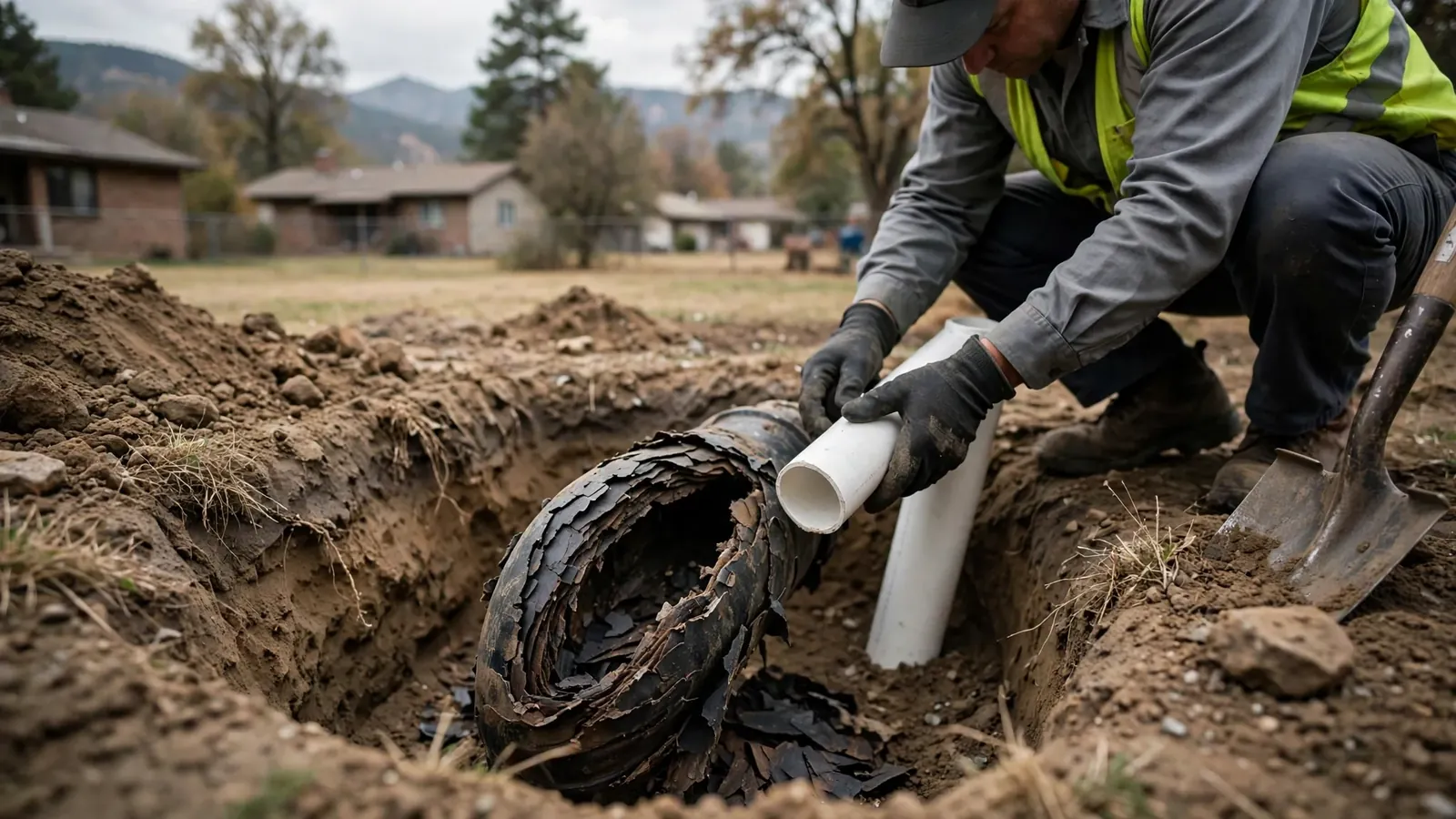
A camera scope is the only sure way. On video, Orangeburg looks black and fibrous, and older sections often show a flattened, oval shape instead of a round one.
Clues that make a scope worth it:
- Your home was built roughly between the late 1940s and early 1970s
- You have had more than one backup in a few years
- A previous plumber mentioned "fiber" or "black pipe"
- You see a soft spot or a sinking strip in the yard along the sewer path
The City of Tempe, which has a large amount of this pipe, notes that city records usually do not show which homes have it. Littleton records are no different, so a scope beats guessing.
Why does Orangeburg pipe fail?
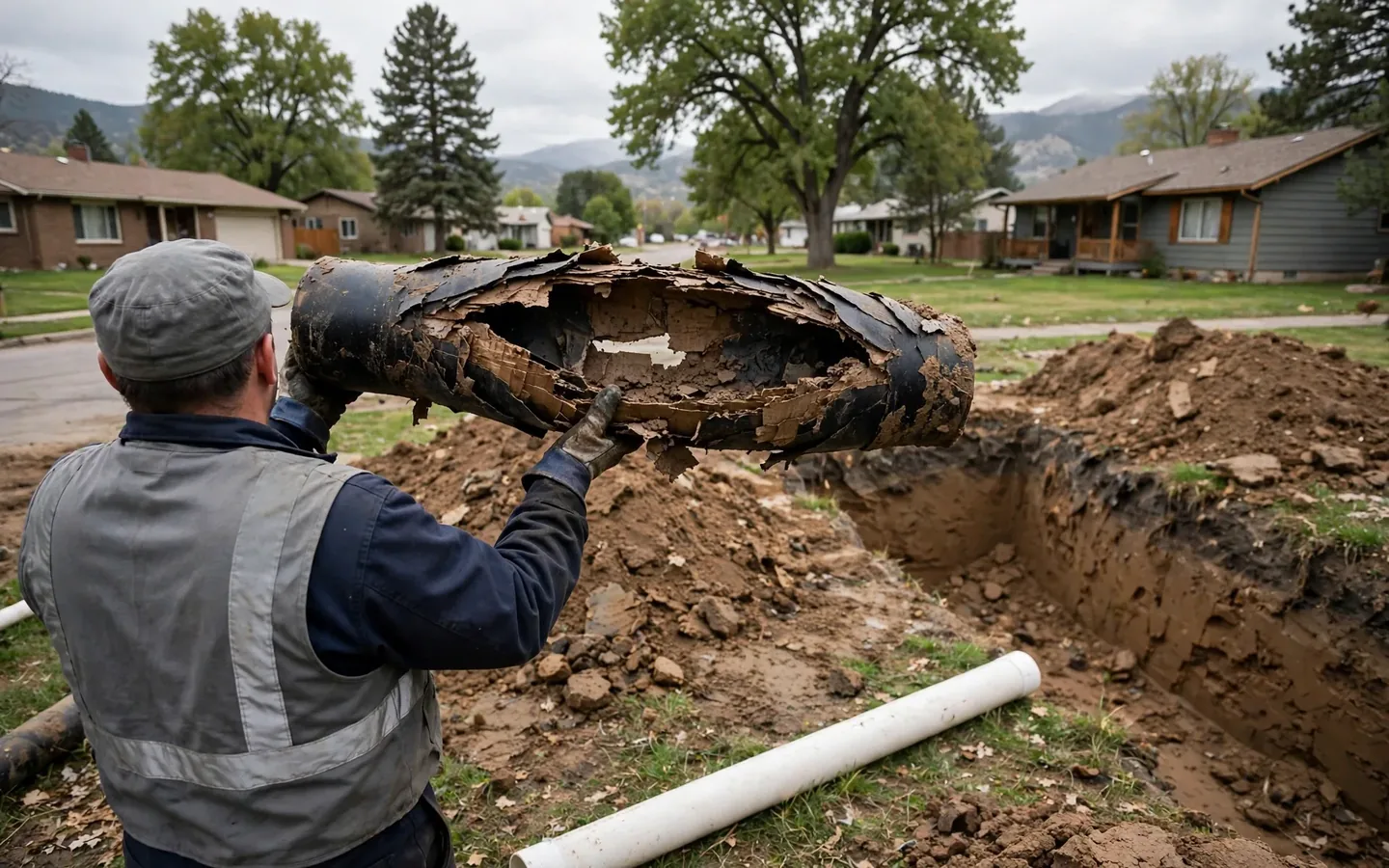
The material softens and deforms with age. As it flattens, flow slows, solids catch, and roots push into the weak spots. The industry expected about a 50 year life, and most of it in the ground today is older than that.
Littleton Homes Where We Look First
We do not assume any neighborhood has Orangeburg. We do scope with extra care in homes from the city's main growth years:
- Ranch homes east of Broadway in 80121 and 80122
- Early Columbine homes in 80123 and 80128 from the Martin Company boom
- Bow Mar and Columbine Valley homes from the late 1940s and 1950s
Many of these homes have clay or cast iron instead. The camera settles it.
Your Replacement Options
- Pipe bursting: a bursting head breaks the old pipe and pulls new HDPE pipe in behind it. Good for Orangeburg that still has a path, even if flattened.
- Lining: only if the pipe still holds its round shape. A liner needs a sound host. Flattened Orangeburg is usually a poor candidate.
- Open trench: best when the line has collapsed, has a deep sag, or needs a new route.
Our rule: we will not line badly deformed Orangeburg. A liner follows the shape it is cured in, so a flat pipe gives you a flat liner.
Permits and District Rules
- Work that reaches the street needs a City right-of-way permit, and your sanitation district may have its own rules for work on the connection.
- The City of Littleton requires a right of way permit if work reaches city right of way.
- Colorado 811 locates must be requested at least three business days before digging.
- Your service line, including the part under the street, is the owner's responsibility under Littleton City Code 7-5-24.
Signs on Camera
- An oval or flattened pipe: the fiber walls are losing their round shape.
- Blistering or flaking walls: layers of the pipe are separating.
- Roots pushing through the wall: not just at joints.
- A collapse: the pipe has fully lost its shape.
How Orangeburg Gets Replaced
- A camera scope confirms the material and how far it runs.
- The method is chosen: open trench or pipe bursting. Orangeburg is usually too weak to line.
- Permits and an 811 locate are arranged before any digging.
- The old pipe is removed or burst, and new PVC or HDPE pipe is installed.
- The district inspects the connection, and a final scope confirms the new line.
What Affects the Cost
Every line is different, so a fair price comes after a camera scope, not before. These are the things that move the number up or down:
- Length of Orangeburg pipe: some homes have it all the way to the main, others only part way.
- Method: open trench or pipe bursting.
- Depth and surface: driveways, trees and landscaping to protect or restore.
- Work under the street: right of way permits and street patching.
- Collapsed sections: a collapse can make bursting harder and may need extra digging.
Orangeburg Questions
Can Orangeburg pipe be lined? Rarely. A liner needs a pipe that still holds its round shape. Most Orangeburg has already deformed, so replacement is usually the lasting fix.
Can I just clean Orangeburg pipe? Cleaning can clear a clog, but aggressive cutting heads can tear soft fiber pipe. We scope first and choose gentle methods.
Should I replace Orangeburg before selling? Many buyers ask for it after their inspector's scope. Replacing it first removes a common sticking point.
Is all black pipe Orangeburg? No. ABS plastic is also black. The camera and the home's age tell them apart.
Book an Orangeburg Check
Call (888) 888 8888 and we will show you what is in the ground.