
On this page10 sections
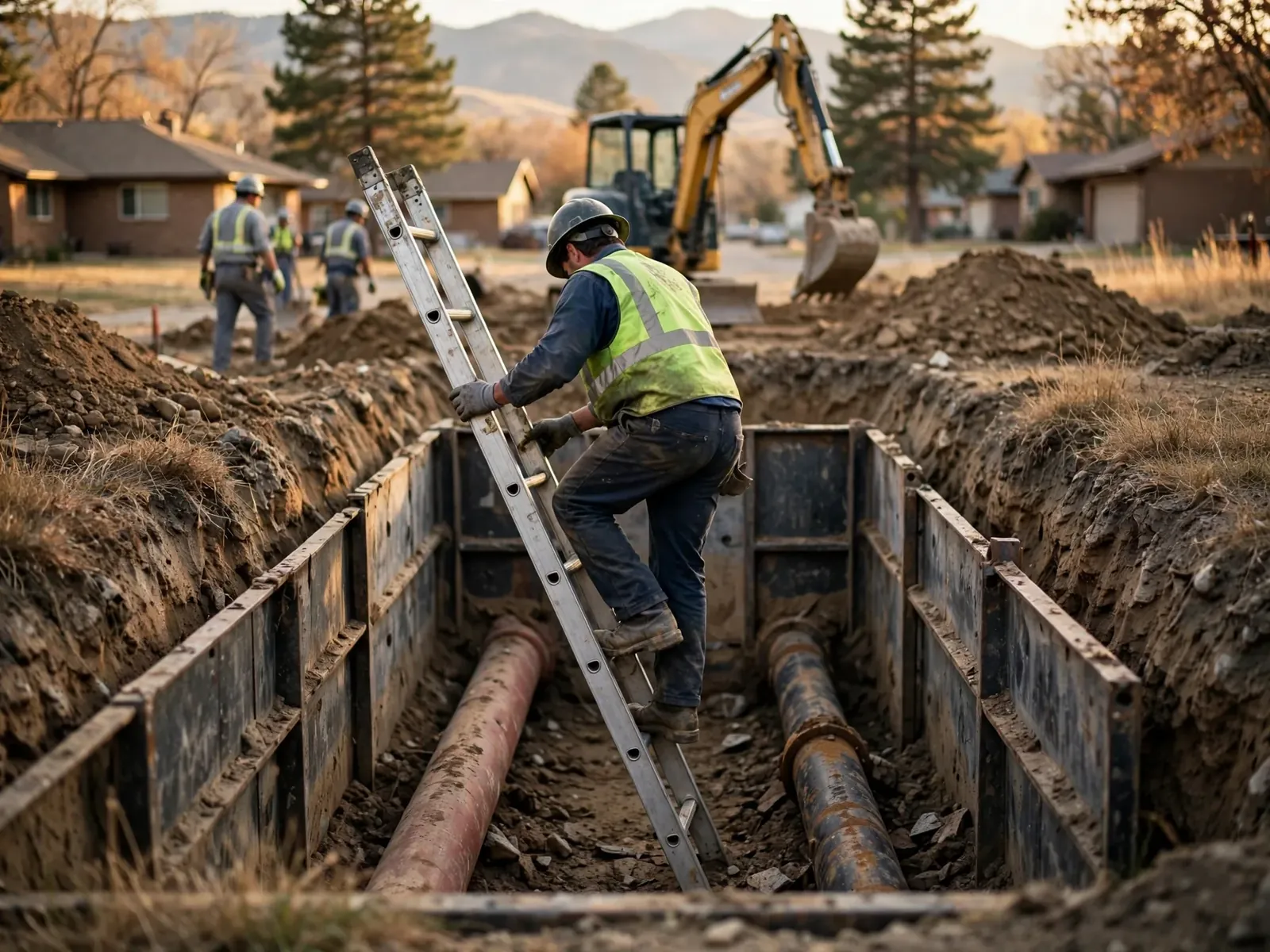
Vitrified clay was common for the outside run to the main. Cast iron was common for the building drain under and inside the house. Both can last a long time, and both fail in ways you can predict.
Call (888) 888 8888 for a scope of your clay or cast iron line.
How to Tell Which Pipe You Have
Look where the main line leaves the house, usually at the cleanout or in the basement. Cast iron is dark, heavy and rings when tapped. Clay is reddish brown and joined in short sections. A camera scope confirms the material along the whole line, which often changes between the house and the street.
Clay Pipe: Strong Pipe, Weak Joints
Clay pipe was laid in short sections, often 2 to 3 feet long, joined end to end. A 60 foot lateral can have 20 or more joints.
Common clay problems:
- Root intrusion at joints, the top cause of repeat backups in older Littleton yards
- Offsets where swelling clay soil pushed one section up or down
- Cracks from ground movement or a heavy load above
- Broken bells at the joint ends
Why do roots love clay sewer pipe?
Older clay joints were sealed with mortar or simple gaskets that open over time. Warm, wet sewer air escapes at those gaps, and tree roots grow toward it.
The U.S. EPA has called root intrusion one of the most destructive problems in sewer systems. In Littleton, the mature trees along downtown streets, in Bow Mar and in Columbine Valley make this a daily issue.
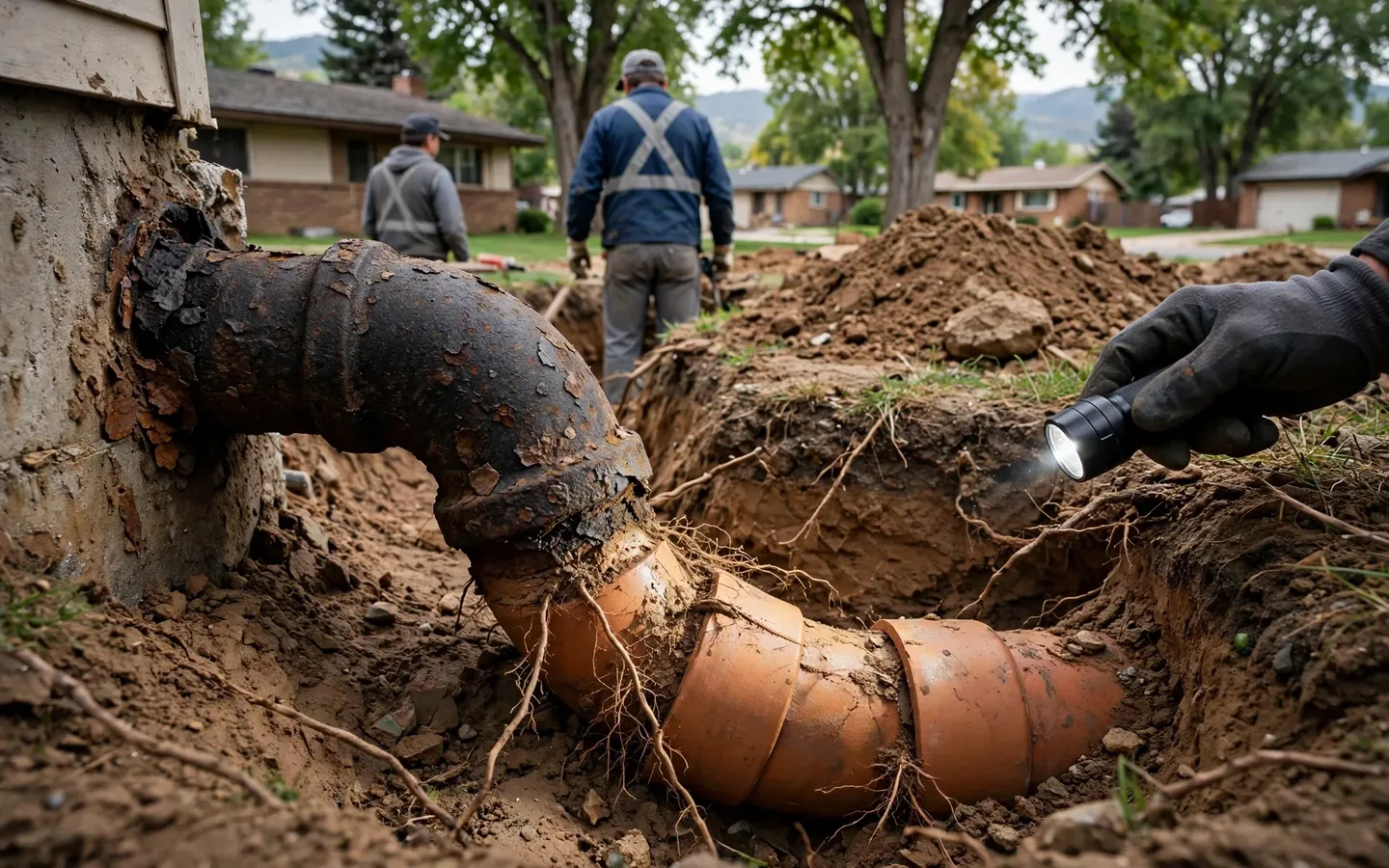
Cast Iron: Strong Walls That Rust From Inside
Cast iron drains were standard inside many homes through the 1960s and beyond.
Common cast iron problems:
- Scale buildup inside the pipe that narrows the opening
- Channel rot along the bottom where water runs
- Cracks along the length of the pipe
- Rusted hubs at the joints
Where it matters most in Littleton: cast iron often runs under the basement slab. A failing slab line can leak under the floor before you see any sign.
Line or Replace?
Lining often works when:
- The pipe still holds its round shape
- Slope is good with no large sags
- The problems are cracks, small holes or root entry at joints
Replacement is usually better when:
- Clay sections are offset enough to catch a camera
- Cast iron has holes through the bottom
- The line has a belly holding water
The Soil Factor
The Colorado Geological Survey warns that swelling clay soil is common along the Front Range. It expands when wet and shrinks when dry. That movement pushes rigid clay pipe out of line over decades, which is why offsets are common here.
Rules That Apply
- Work that reaches the street needs a City right-of-way permit, and your sanitation district may have its own rules for work on the connection.
- Valley Sanitation District requires licensed contractors for lining that reaches the main.
- Columbine Water and Sanitation District has reported backups caused by liner ends sticking into the main, so we trim and inspect every connection.
- Request Colorado 811 locates at least three business days before digging.
How to Prevent It
- Have clay lines cleared of roots before they block, then consider sealing the joints.
- Avoid chemical drain cleaners in cast iron. They can speed up corrosion.
- Scope older lines every few years; see how long sewer lines last.
- Keep grease out of the drains, since rough cast iron catches it easily.
What Affects the Cost
Every line is different, so a fair price comes after a camera scope, not before. These are the things that move the number up or down:
- Pipe condition: root filled joints can often be lined; crushed clay or scaled through cast iron cannot.
- Method: lining, pipe bursting, spot repair or a new line.
- Line length and depth: more and deeper pipe means more work.
- Access: work under basements and slabs costs more.
- Permits: district permits for any work at the tap.
Clay and Cast Iron Questions
Is clay pipe bad? No. Clay itself resists corrosion well. The joints are the weak point.
Can roots be cut out for good? Cutting clears them for a time. Sealing the joints with a liner or replacing the pipe stops them from returning.
How long does cast iron last? It varies with water use and conditions. A camera tells you more than the age does.
Book a Scope
Call (888) 888 8888 and see every joint on video.