
On this page9 sections
Solids settle in that standing water, paper catches, and slow drains turn into backups. Bellies are common under newer Littleton homes and older ones alike, for different reasons.
Call (888) 888 8888 to find out if your line has a belly.
What Is a Bellied Sewer Line?
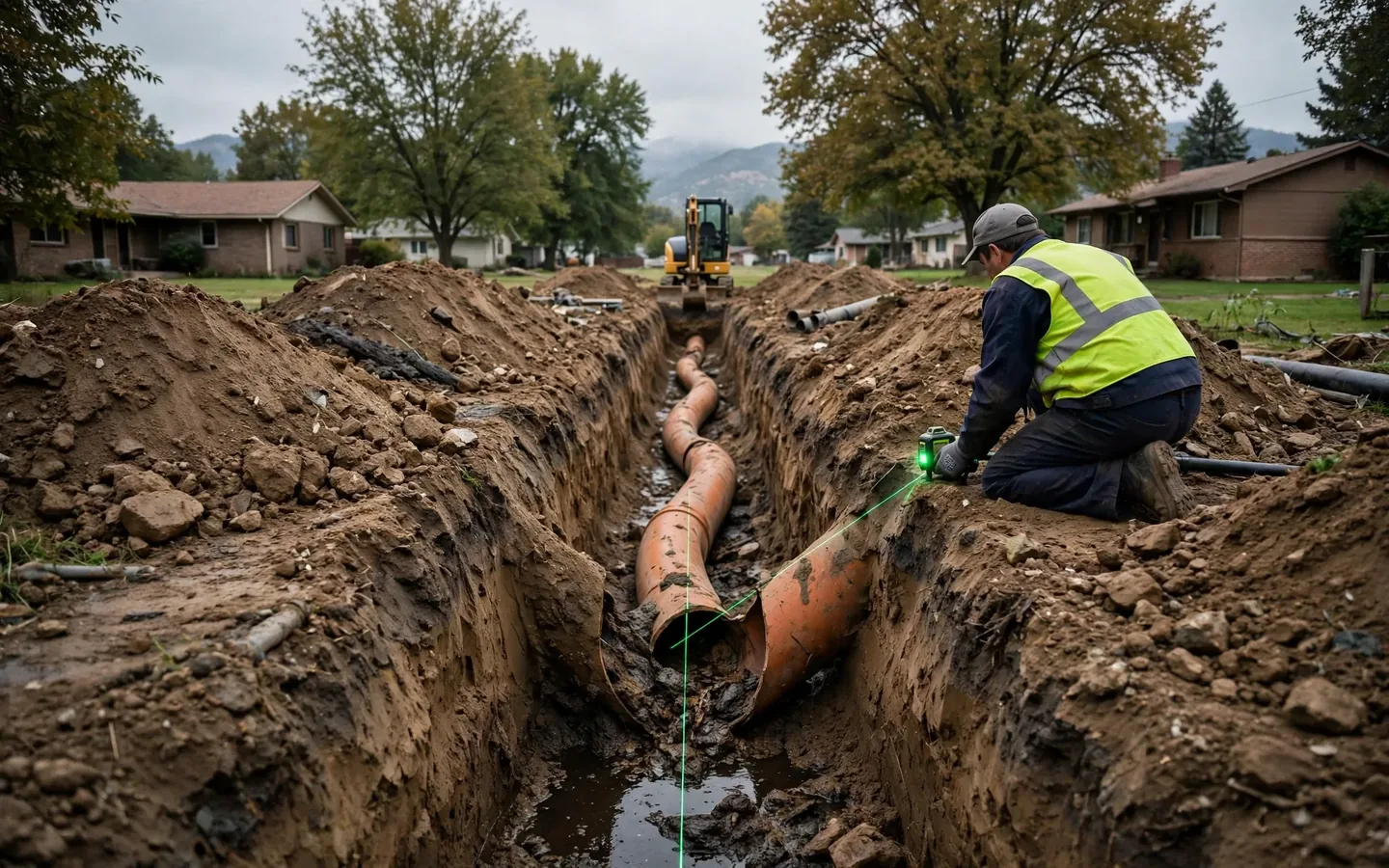
A belly is a low spot in a sewer line where the pipe has sunk below its proper slope. Water and waste collect in the dip instead of flowing to the main. Small bellies may cause no trouble, but larger ones catch paper and waste and lead to repeat clogs.
How Do I Know If My Sewer Line Has a Belly?
A camera scope shows it clearly. As the camera moves through a belly, it dips into standing water, and the lens goes partly or fully under.
Signs at home:
- Drains that slow down again soon after cleaning
- A gurgle from the toilet when the washer drains
- Backups that clear and return in a pattern
- Paper or debris found at the same distance every time a line is cleaned
What causes a sewer line to sag?
Most bellies form when the soil under the pipe settles or shifts. Loose backfill, swelling clay, water leaking from a joint and poor bedding during installation are the usual causes.
Why Bellies Show Up in Littleton
Newer subdivisions: in places such as Highlands Ranch, Grant Ranch and Sterling Ranch, lots were graded and filled. Fill soil can settle for years after a house is built, and the pipe settles with it.
Older neighborhoods: in 1950s and 1960s homes east of Broadway and in Columbine, decades of swelling and shrinking clay can push sections out of grade. The Colorado Geological Survey lists swelling soil as a hazard across much of the Front Range.
Near the river: ground in the South Platte valley, including Columbine Valley, has a history of flooding and saturation, which can shift bedding under pipe.
How Much Belly Is Too Much?
There is no single number. What matters is whether the sag causes problems:
- Minor: holds a little water and drains fine with normal use
- Moderate: holds enough water to catch solids and needs regular cleaning
- Severe: fills the pipe and causes backups
Our approach: we measure the length and depth on camera, then tell you if it is a "watch it" belly or a "fix it" belly.
How Bellies Get Fixed
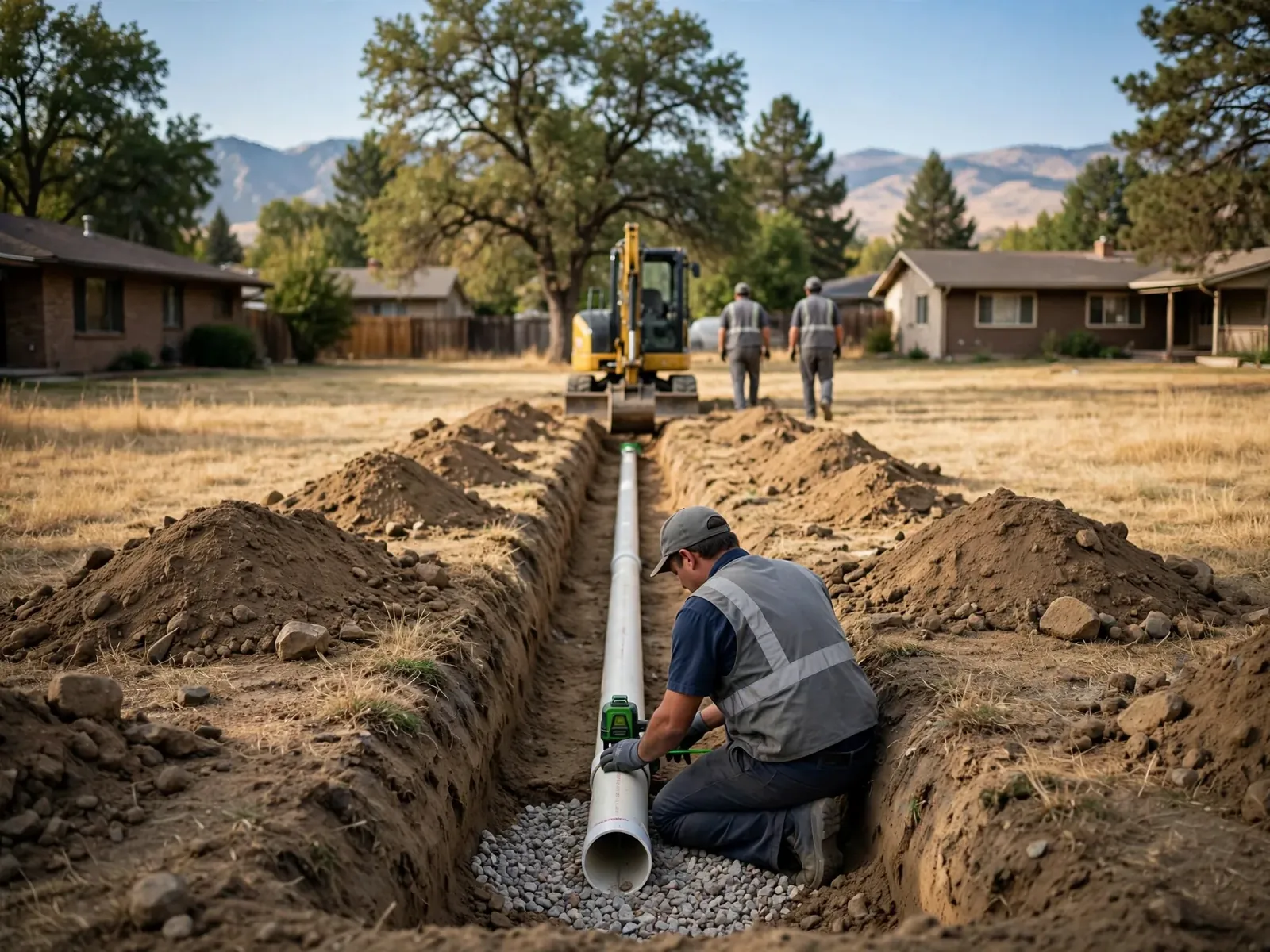
- Spot repair by excavation: dig at the low point, re bed the pipe on firm material and set it at the right slope
- Full replacement: when the belly is long or the line has other damage
- Not lining: a liner follows the old pipe, so it keeps the sag
Bursting also follows the old path, so a deep belly usually means digging at that spot.
Before Any Dig
- Request Colorado 811 locates at least three business days ahead.
- Work that reaches the street needs a City right-of-way permit, and your sanitation district may have its own rules for work on the connection.
- Work in city right of way needs a City of Littleton right of way permit.
What Affects the Cost
Every line is different, so a fair price comes after a camera scope, not before. These are the things that move the number up or down:
- Length of the belly: a short dip is a small dig; a long sag is a larger one.
- Depth and location: under a driveway, patio or slab costs more to reach.
- Soil: swelling clay soil may need extra bedding work; see swelling clay soil.
- Repair or replace: one section versus the whole line.
- Permits and restoration: district permits and putting the yard back.
Belly Questions
Can a new home have a bellied sewer line? Yes. Settling fill is a leading cause in newer homes.
Will hydro jetting fix a belly? It clears the debris, but the sag stays. Jetting is maintenance, not a fix.
Does a belly always need repair? No. Small sags that drain fine can be watched with periodic scopes.
Book a Belly Check
Call (888) 888 8888 and see your line's slope on camera.