
On this page10 sections
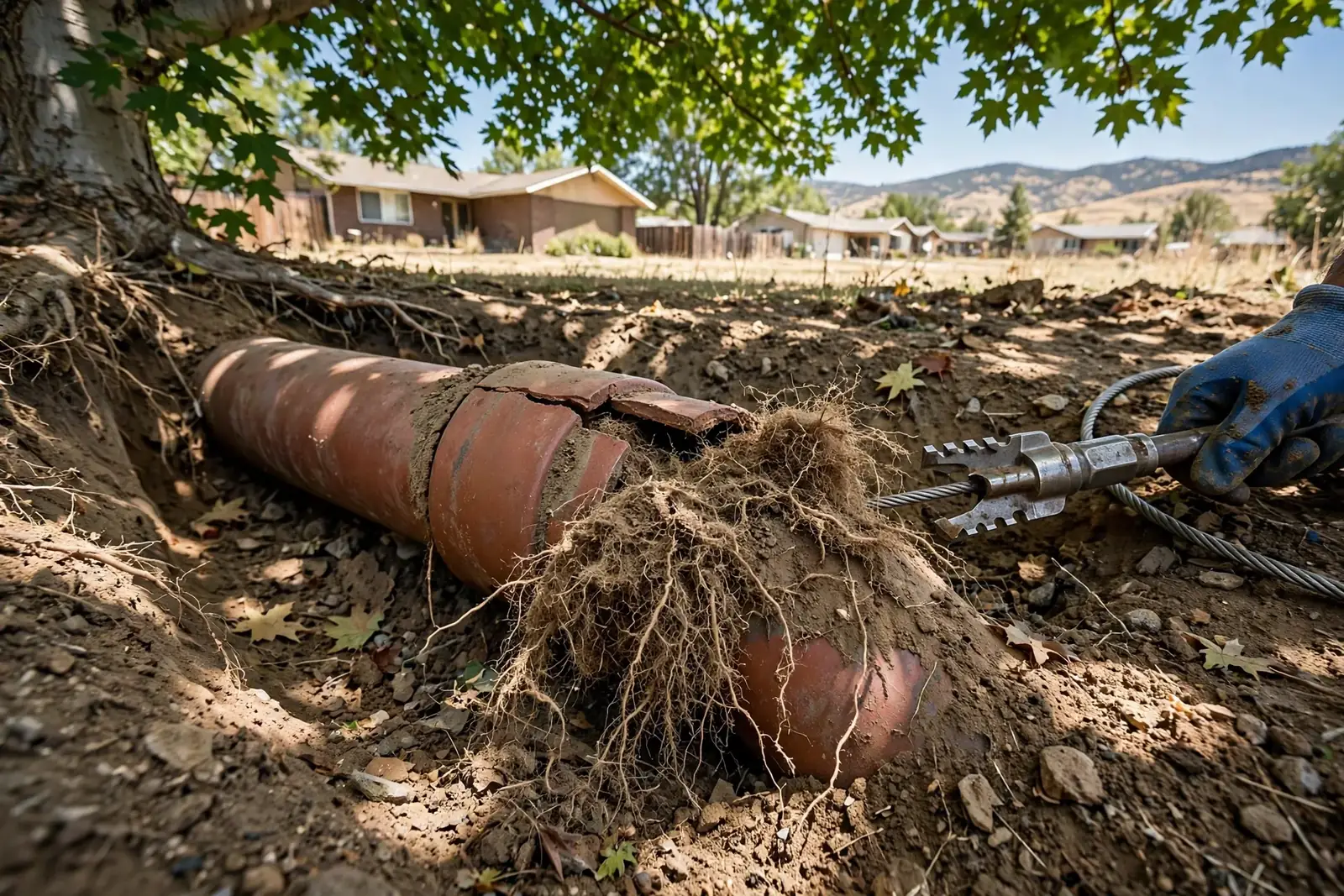
A tiny gap at a pipe joint leaks warm, moist air, and roots grow toward it. Once inside, they spread into a net that catches paper and waste. The EPA has called root intrusion one of the most destructive problems facing sewer systems.
Call (888) 888 8888 to clear roots and find where they are getting in.
Signs of Roots in Your Sewer Line
- Slow drains across the whole house, not just one sink
- Gurgling toilets
- Backups that return every year or two
- Backups that get worse in late spring and summer, when trees grow fastest
How do tree roots get into a sewer pipe?
Roots enter through openings that already exist, such as loose clay joints, cracks and separated PVC joints. They do not usually break solid pipe at first, but once inside they grow and widen the gap.
Three Ways to Deal With Roots
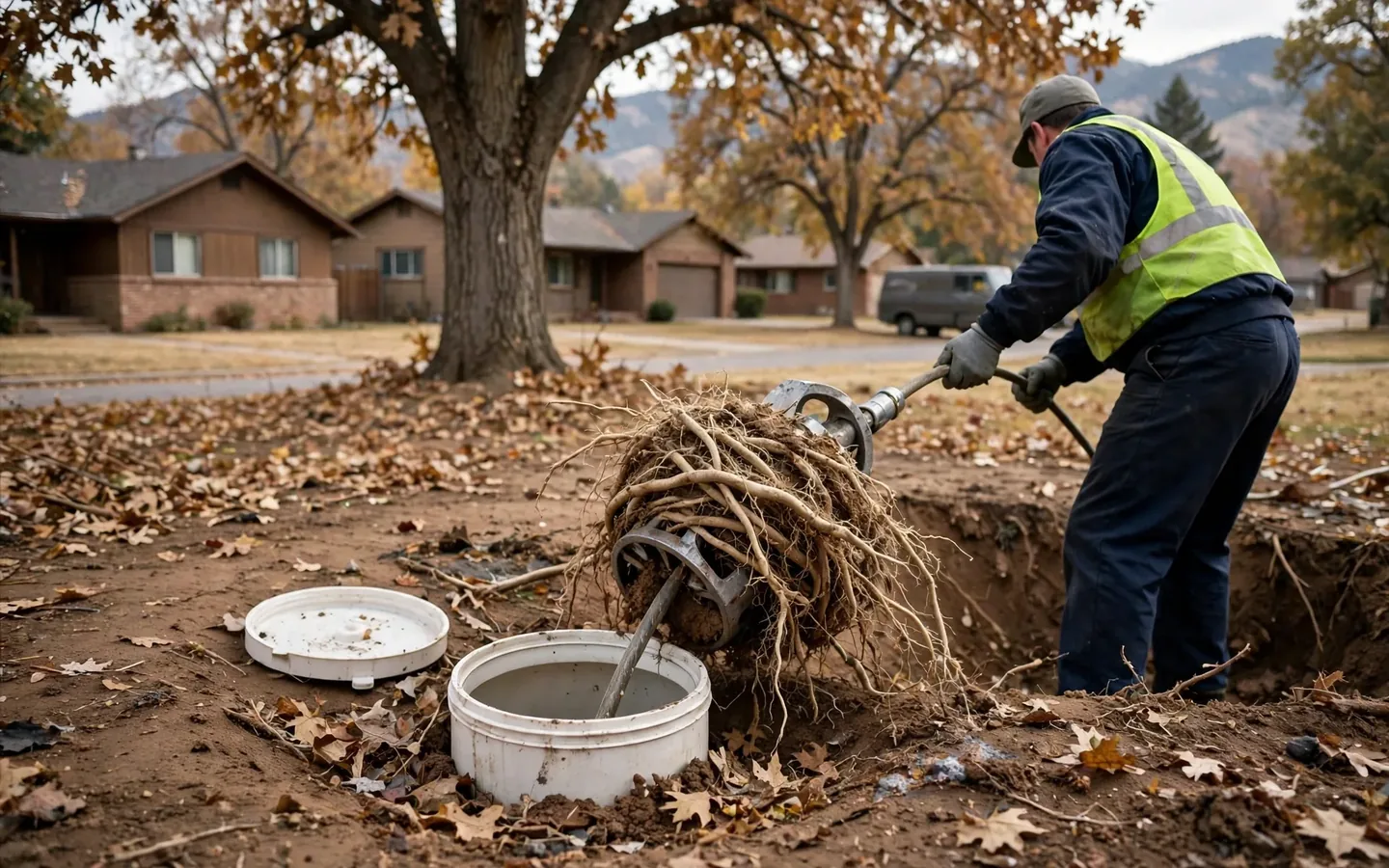
1. Mechanical cutting A cable machine with a cutting head clears roots from the pipe. Fast and effective for a while, but roots grow back from what is left in the joint.
2. Hydro jetting High pressure water cuts roots and flushes debris. Cleaner walls make it easier to see the entry points on camera afterward.
3. Sealing the entry points A liner or new pipe closes the joints so roots cannot get back in. This is the long term fix.
Our order: clear, scope, then decide. Clearing alone is fine for a one time problem. Repeat root backups mean the joints need sealing.
The Ash Tree Problem in Littleton
Emerald ash borer was found in Littleton in 2023, and the city has said about 15 percent of its trees are ash. Many homeowners are now removing infested ash trees.
What that means for your sewer line:
- Roots of a removed tree die and decay over time, leaving voids and loose soil around the pipe.
- Stump grinding near the line can disturb a shallow pipe.
- A tree removal is a good moment to scope the line and plan any repair while the area is open.
Trees That Often Cause Trouble
Fast growing trees with water seeking roots are the usual culprits near sewer lines, including silver maple, cottonwood and willow. Cottonwoods are common along the South Platte River and the High Line Canal near Littleton. Plant new trees well away from the sewer path.
Where We See Roots Most
- Downtown Littleton and 80120 older homes under mature street trees
- Bow Mar and Columbine Valley large lots with decades old trees
- Columbine Knolls and Columbine Hills 1960s clay laterals
- Newer areas where landscaping planted 20 to 30 years ago has matured
How Root Clearing Works
- A camera scope finds where roots enter and how heavy they are.
- A cable with a cutting head, or a jetter with a root nozzle, clears the roots.
- The line is flushed to carry cut roots to the main.
- A second scope checks the joints and the pipe.
- You decide whether to clear on a schedule or seal the joints so roots stay out.
When to Scope Again
After roots are cleared, a follow up scope in about a year shows how fast they are coming back. If roots return quickly, sealing the joints usually costs less over time than clearing them again and again.
What Affects the Cost
Every line is different, so a fair price comes after a camera scope, not before. These are the things that move the number up or down:
- How heavy the roots are: fine roots clear fast; a root mass takes longer.
- Clearing method: cable cutting, jetting or both.
- Access: an outdoor cleanout is fastest.
- Pipe condition: broken pipe may need repair after clearing.
- Sealing the joints: a liner keeps roots out but costs more than clearing.
- Trees near the line: removing an ash tree is a good time to check; see removing an ash tree.
Root Questions
Will root killer fix it? Root control products can slow regrowth, but they do not seal the joint. Follow product labels and district rules.
Should I cut down the tree? Not always. Sealing the pipe usually lets you keep the tree.
How often should roots be cleared? If you need it more than once every year or two, the pipe needs repair.
Book Root Clearing
Call (888) 888 8888 and we will clear the line and show you where roots are entering.