
On this page8 sections
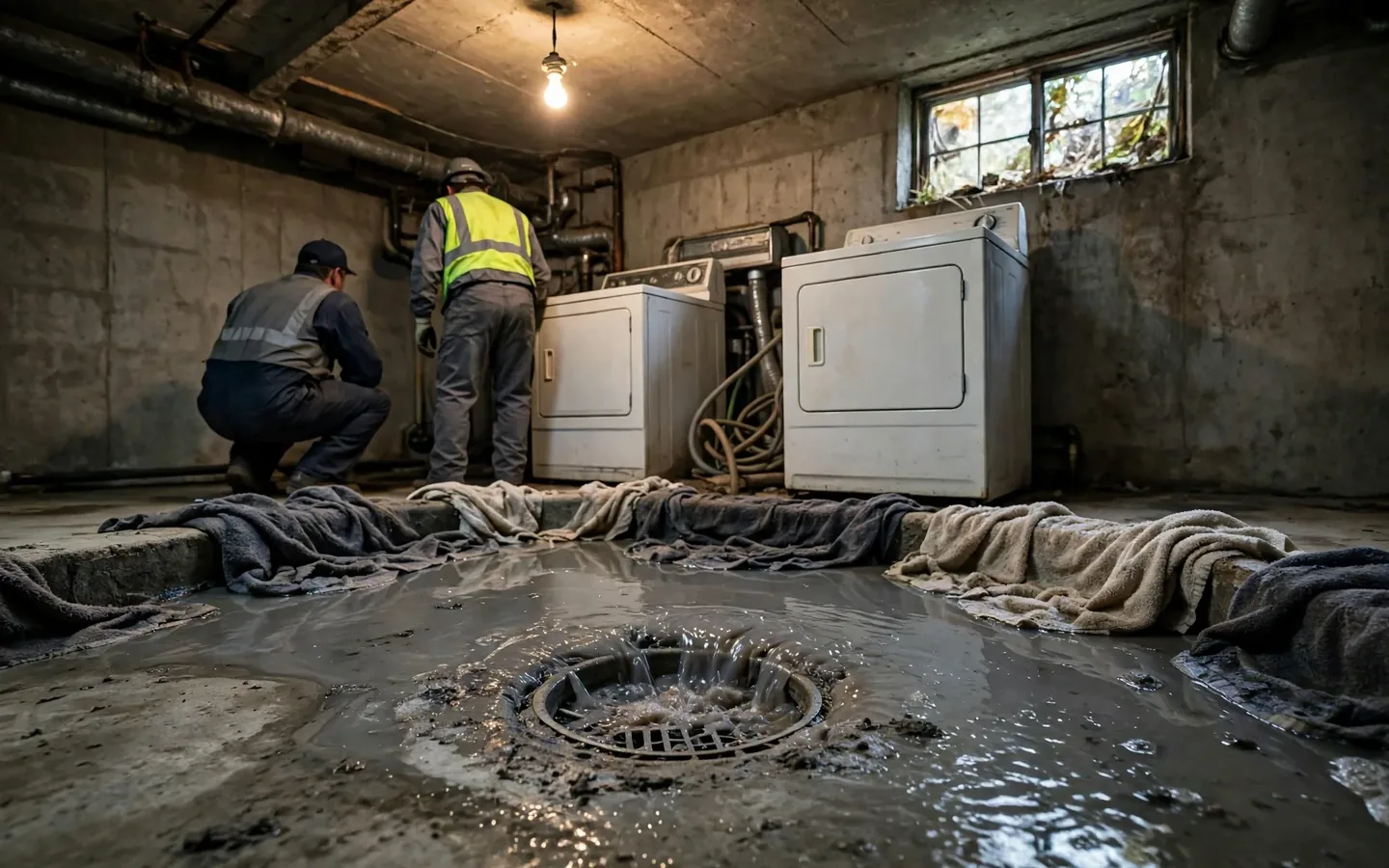
Sewage follows gravity. When the main line blocks, wastewater rises until it finds the lowest opening, and in most Littleton homes with basements that is the floor drain. Water there means the main line needs attention.
What a Floor Drain Does
A basement floor drain catches water from a water heater leak, a washer overflow or a mopped floor. In most homes, it connects to the sanitary sewer through a trap that holds water to block sewer gas.
Why is water coming up through my basement floor drain?
Usually because the main sewer line is blocked or the district main is overloaded. Wastewater from upstairs fixtures cannot get out, so it rises at the lowest point.
Clear Water or Sewage?
| What you see | Likely cause |
|---|---|
| Clear water after heavy rain | Groundwater or rainwater entering, or the district main overloaded |
| Gray or dirty water when the washer drains | Main line restriction |
| Sewage with toilet paper | Main line blockage |
| Slow seep that comes and goes | Partial blockage or groundwater |
| Odor with no water | Dry trap |
Why Littleton Basements Are at Risk
- Many homes have basements, especially in Governors Ranch, Ken Caryl, Columbine and Highlands Ranch
- Split levels put family rooms and laundry close to sewer depth
- Finished basements turn a small backup into big damage to flooring and drywall
- Summer storms can overload mains from mid April to mid September
- Snowmelt in spring raises groundwater
What to Do When It Backs Up
- Stop using water everywhere in the house
- Keep kids and pets away
- Call your sanitation district so it can check the main
- Do not open the outdoor cleanout unless you are ready for sewage to come out
- Take photos and video for insurance
- Book main line clearing and a camera scope once the district rules out the main
Protecting a Basement
Know the drain:
- Keep the floor drain clear of boxes and storage
- Pour water in every month or two so the trap stays full
Reduce the risk:
- Point downspouts away from the house
- Make sure a sump pump discharges outside, not into a sewer drain
- Scope older lines, especially with big trees nearby
Add protection:
- A backwater valve stops sewage from the public main from flowing back in. It does not stop backups caused by a blockage in your own line.
- Some homeowners add a floor drain plug or check device. Ask a plumber which fits your drain.
Should You Cover the Floor Drain?
Covering it completely does not fix the cause. Sewage will find the next lowest opening, such as a basement shower or toilet. Fix the line instead.
Insurance Reminder
Standard homeowners policies often exclude sewer backup unless you add an endorsement. If you have a finished basement, ask your agent about it. See our insurance guide.
Common Questions
Can a floor drain back up from a neighbor's water use? If the district main is blocked, flow from many homes can back up into the lowest basements. Call the district.
Is a little water in the floor drain normal? Water sitting in the trap below the grate is normal. Water rising above the grate is not.
Does the floor drain connect to the storm sewer? In most homes, it connects to the sanitary sewer. Ask a plumber if you are not sure.