
On this page9 sections
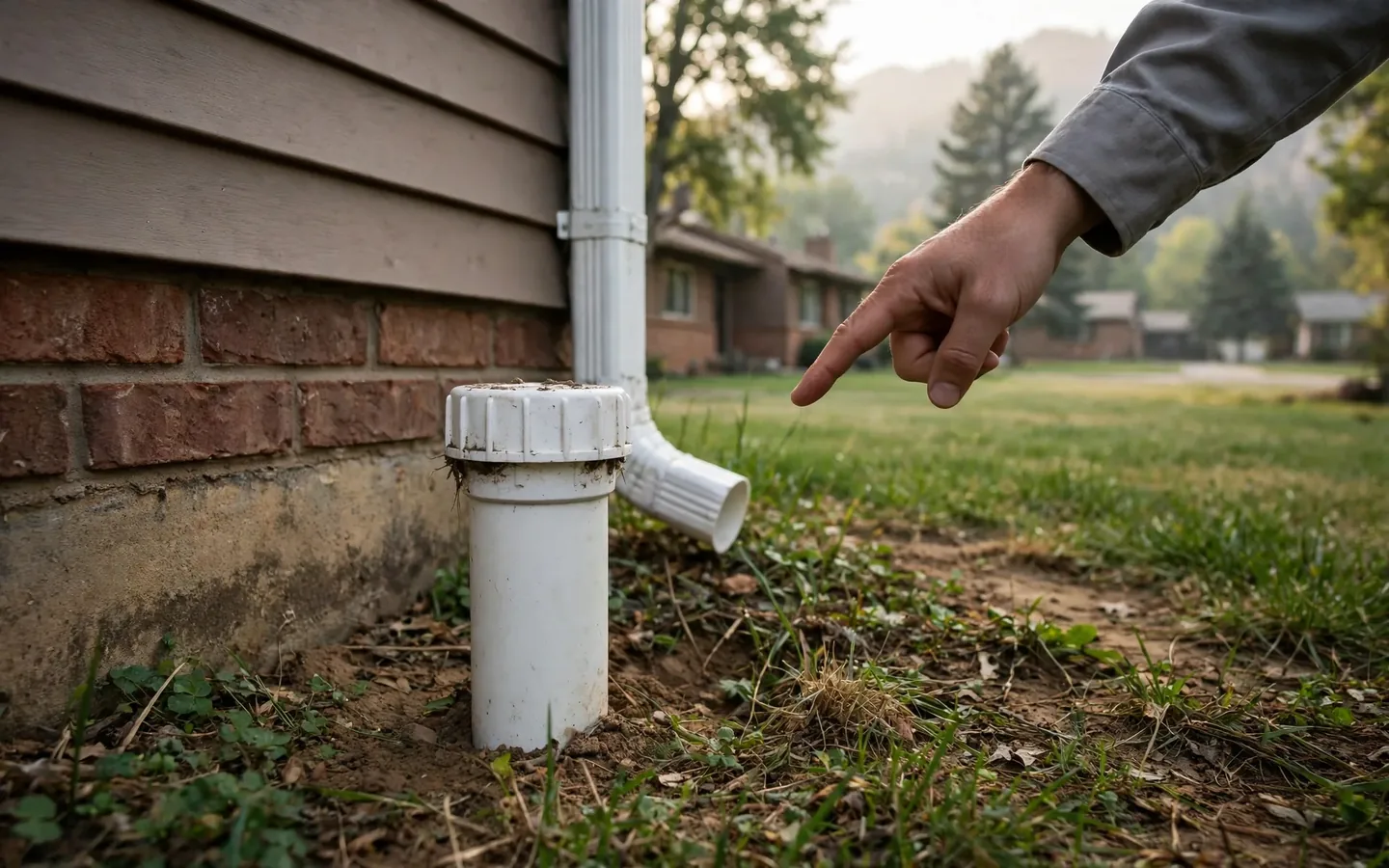
A sewer cleanout is a capped pipe, usually 3 or 4 inches across, that opens into your main sewer line. Look first near the foundation on the side of the house facing the street, then in the basement near where the main drain leaves the house.
Knowing where it is before a backup saves time and mess.
What It Looks Like
- A round pipe sticking up a few inches from the ground, or flush with it
- A threaded cap, often with a square nub or a slot on top
- Usually white or black plastic on newer homes, metal on older ones
- Sometimes marked "CO" or "cleanout"
Where is the sewer cleanout usually located?
Outside, often within a few feet of the foundation on the street side, or near the front yard along the sewer path. Inside, often in the basement or crawlspace near where the main drain exits the wall or floor.
Places to Check Outside
- Along the foundation facing the street
- Near the front yard in line with where the sewer runs to the street
- Under bushes or mulch in front landscaping
- Near a downspout or hose bib, where builders often grouped utilities
- In a small box with a lid in the lawn
Littleton tip: in winter, the cleanout may be under snow. Mark it with a garden stake in the fall.
Places to Check Inside
- Basement: near the wall facing the street, low on the main drain
- Utility or laundry room: near the floor drain
- Crawlspace: where the main drain leaves the house
- Garage: in some homes, along the wall nearest the street
Inside cleanouts are often a Y shaped fitting with a plug on the side of the main drain.
Pipes That Are Not Cleanouts
| Pipe | How to tell |
|---|---|
| Irrigation backflow or valve box | Has valves or brass fittings, often near sprinklers |
| Radon vent | Runs up the side of the house from the basement, often with a fan |
| Downspout drain | Connects to a gutter |
| Water meter pit | Round lid, often near the street, may say "water" |
| Gas line | Yellow or metal, never open it |
Two Way Cleanouts
Some cleanouts open in both directions, toward the house and toward the street. They make clearing and camera work easier.
What If You Cannot Find One?
Many older Littleton homes, especially from the 1950s and 1960s, were built without an outdoor cleanout. Without one, a crew may need to pull a toilet or work through a roof vent.
Options:
- A crew can locate the line with a camera and electronic locator
- A cleanout can be installed during any repair, or on its own
Before You Open It
- Do not open a cleanout during a backup unless you are ready for sewage to come out. Pressure behind a blockage can push waste out of the opening.
- Use the right tool. Old metal caps can be stuck.
- Make sure the cap goes back on tight. An open or cracked cap lets rainwater and debris in.
Why the Cap Matters
A missing or broken cleanout cap lets rainwater pour into the sewer. Sewer agencies list uncapped cleanouts as a common source of rainwater entering sewer systems during storms.
Common Questions
Is the cleanout mine or the district's? It is part of your service line, so it is yours.
Can I put a planter over it? It is better to keep it visible and easy to reach.
Do newer Highlands Ranch or Sterling Ranch homes have one? Most newer homes do. Find yours before you need it.