
On this page7 sections
Flooding pushes huge amounts of water into the ground and into sewer systems. Littleton learned this in 1965, and the lessons still matter for homes in the South Platte River valley and along the city's drainageways.
The 1965 South Platte Flood
In mid June 1965, a series of unusually severe thunderstorms caused the most destructive flooding in Colorado's history, from the mountains to the eastern border. Littleton was hit hard by water that came from the Plum Creek basin on Wednesday, June 16.
- State patrol officers reported a wall of water about 20 feet high heading toward Littleton.
- Near Littleton, the flooding spread 2,000 to 3,500 feet wide.
- Downtown Littleton itself did not flood.
- In the Town of Columbine Valley, homes along Driver Lane were damaged or destroyed.
The Mile High Flood District calls it Denver's worst flood of record.
Did the 1965 flood change how Littleton handles floods?
Yes. Chatfield Dam was built from 1967 to 1975 to hold back South Platte and Plum Creek runoff. The Mile High Flood District was formed in 1969. Littleton bought floodplain land that became South Platte Park.
What Changed After 1965
- Chatfield Dam: the U.S. Army Corps of Engineers built it to cut flood risk in the Denver area. Its flood pool is now Chatfield State Park.
- Mile High Flood District: created in 1969 in response to the flood.
- South Platte Park: much of the park sits in the floodplain that was preserved after 1965. The Carson Nature Center has flood exhibits and a high water sculpture.
- Floodplain mapping: Littleton Public Works manages the city's drainageways and floodplains with the Mile High Flood District. Big Dry Creek is one of the mapped drainageways.
How Floods Affect Sewer Lines
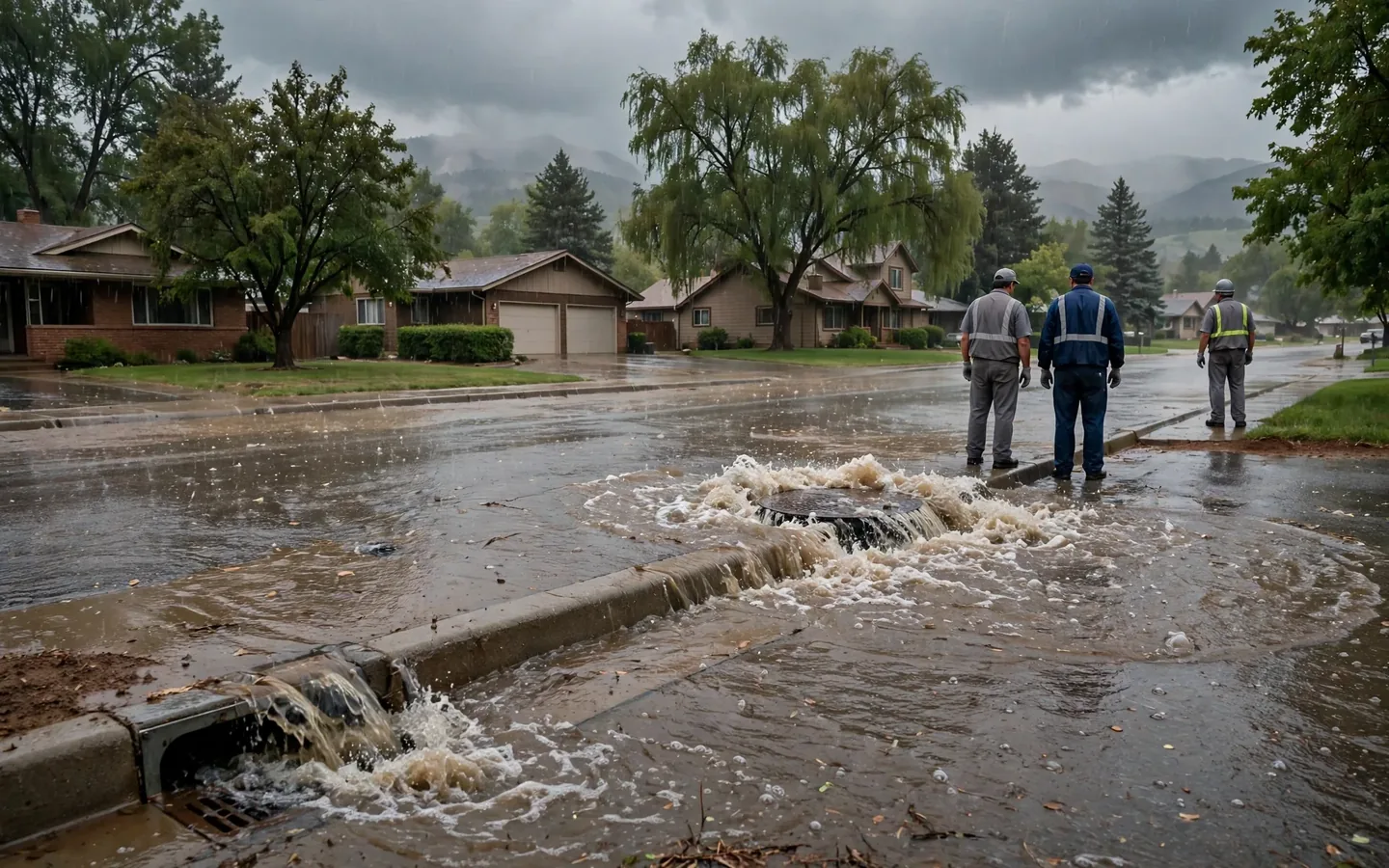
1. Overloaded mains Floodwater entering manholes, cleanouts and cracked pipe fills the system. A 1989 FEMA flood study for Littleton noted that once sewer capacity is exceeded, flooding moves downstream along streets and across private property.
2. Saturated soil Soaked ground puts pressure on pipe and can shift bedding.
3. Washed out ground Fast water can carry soil away from pipe, leaving voids.
4. Debris Mud and silt that enter the line settle in low spots.
The September 2013 Floods
In September 2013, rain in parts of the Front Range went beyond the 500 year event, causing widespread damage across the flood district. Even areas that did not flood saw high groundwater for weeks.
Littleton Homes Near Water
- Columbine Valley along the South Platte
- Homes near South Platte Park and Hudson Gardens
- Streets along Big Dry Creek and other mapped drainageways
- Lake area homes around Bow Mar, Marston Lake and Grant Ranch
A key point: a "100 year" flood does not mean it happens once a century. The city explains that it has a 1 in 100 chance of happening in any year.
Preparing Your Sewer Line
Before flood season:
- Find out if your home is in a mapped floodplain
- Make sure cleanout caps are tight, so floodwater cannot pour in
- Install a backwater valve if you have basement fixtures
- Scope older lines near the river
After a flood:
- Stay out of floodwater, which may contain sewage
- Call your sanitation district before using plumbing
- Scope the line before assuming it survived
- Check insurance. Flood and sewer backup are separate coverages
Common Questions
Does flood insurance cover my sewer line? Flood policies cover flood damage as defined. Damage to the pipe itself and ordinary backups are usually separate.
Is Chatfield Dam a guarantee? It greatly lowers South Platte flood risk, but local storms on smaller drainageways can still flood streets.
Can floodwater collapse a sewer pipe? It can wash out supporting soil and lead to sags or breaks.