
On this page7 sections
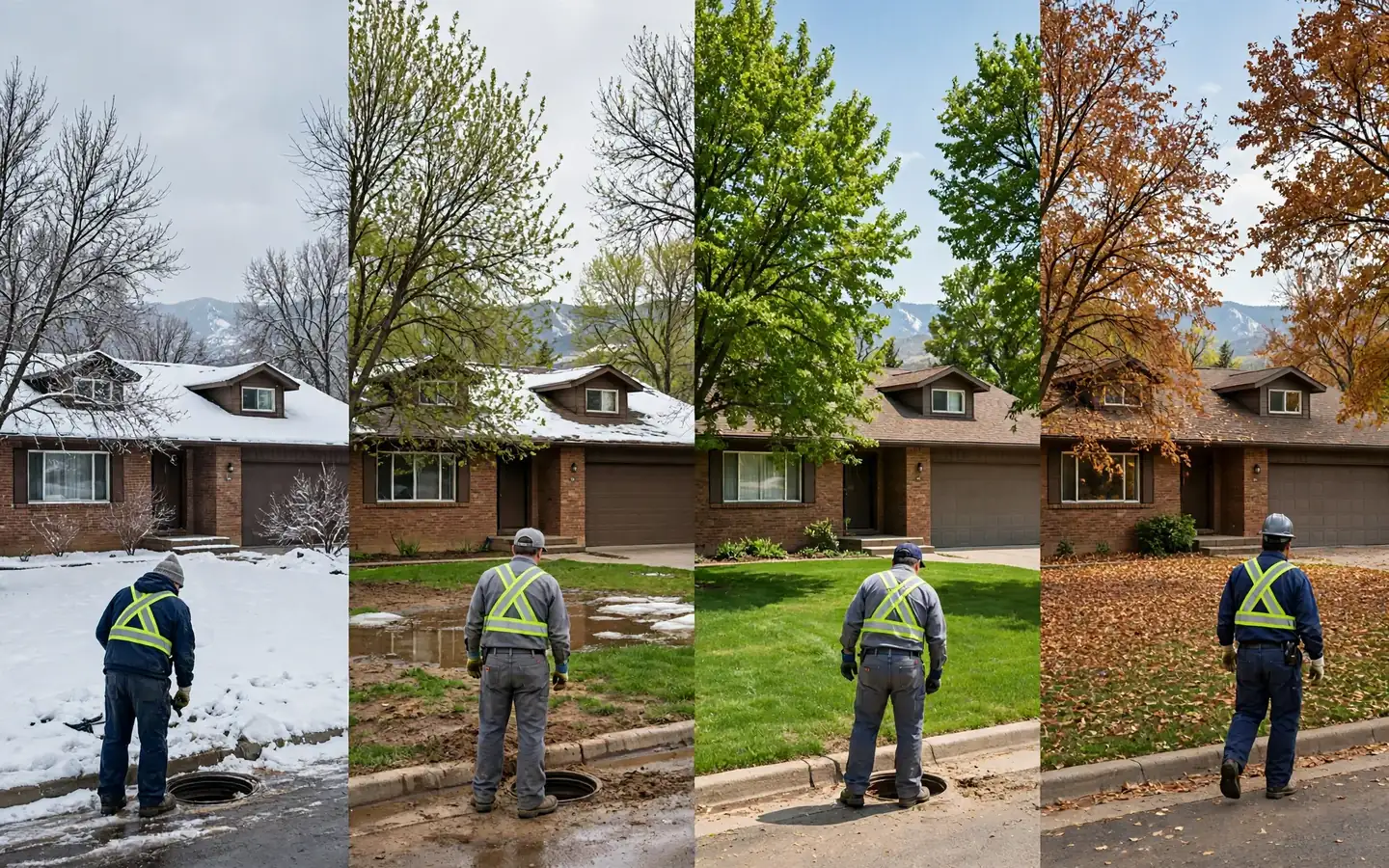
Littleton's weather changes what your sewer line faces through the year: spring snowmelt, summer storms, fall root growth and winter freezes. A few small tasks at the right time prevent most surprises.
Use this calendar alongside our deeper guides on each weather risk.
Spring (March to May)
What the weather does: March is the area's snowiest month. Melting snow soaks clay soil, raises groundwater and wakes up tree roots. Freezing nights continue, with Denver's average last freeze around April 28.
What to do:
- Watch the lowest drains for a week or two after each big melt
- Scope older lines if you had backups last spring
- Clear snow away from the cleanout and foundation
- Point downspouts well away from the house before storm season
Read more: March Snowstorms and Snowmelt
When is the best time of year to scope a sewer line in Littleton?
Spring is a strong choice. Winter movement and new root growth are fresh and easy to see, and you have time to repair before summer storms.
Summer (June to August)
What the weather does: hail season runs from mid April to mid September. Short, heavy storms can overload sewer systems with rainwater. Hot, dry stretches also dry out clay soil between storms.
What to do:
- Confirm the sump pump drains outside, not into a sewer pipe
- Replace cracked cleanout caps
- Hold off on laundry and dishwashers during heavy storms
- Water trees deeply at the drip line, not over the sewer path
- Plan any digging around Western Welcome Week in August if your street is near the festivities downtown
Read more: Summer Thunderstorms and Backups · Drought and Dry Soil
Fall (September to November)
What the weather does: soil is often at its driest after summer. Trees are still pulling water and pushing roots before dormancy. Freezing nights return.
What to do:
- Clear roots before winter if you had any last year
- Insulate drain pipe in crawlspaces and unheated garages
- Stake the cleanout so you can find it under snow
- Get ready for holiday cooking: keep a grease can by the stove
- Book any repairs before the ground freezes hard, if you want open trench work
Read more: Tree Roots: What Works
Winter (December to February)
What the weather does: nights below freezing are common, but most days thaw. That freeze and thaw cycle shifts shallow soil and rigid pipe joints. Holiday guests and cooking add load to the line.
What to do:
- Keep heat on in every part of the house, including vacant homes
- Scrape grease into the trash, not the sink
- Space out laundry when guests are staying
- Keep the path to the cleanout clear of snow
Read more: Freeze and Thaw Cycles · Winter Sewer Care
Any Time of Year
- Know your sanitation district and its phone number. See our district guide.
- Know where your cleanout is.
- Keep scope videos with your home records.
- Call your district first during any backup.
Weather Risk by Home Type
| Home type | Biggest weather risk |
|---|---|
| 1950s to 1960s ranch with clay lateral | Roots in dry years, offsets after wet springs |
| Split level with low floor drain | Summer storm backups |
| Finished basement home | Storm and snowmelt backups |
| Newer home on fill | Settling after wet seasons |
| River valley home | Flood and high groundwater |
| Hillside home | Soil creep after heavy moisture |
Common Questions
Do I need to do all of this every year? No. Pick the items that fit your home's age and history.
What is the single most useful habit? Keeping grease and wipes out of drains, all year.