
On this page9 sections
Most indoor sewer smells come from a dry drain trap, a failed toilet seal, a blocked vent or a cracked pipe. Start with the simplest cause, a dry trap, and work toward the sewer line.
Safety first: if you smell what could be natural gas, leave the house and call your gas utility or 911 from outside. Natural gas and sewer gas can smell alike to some people.
What Sewer Gas Is
Sewer gas is a mix that can include hydrogen sulfide, methane and ammonia. The rotten egg smell comes from hydrogen sulfide. InterNACHI notes that hydrogen sulfide is toxic and explosive at high levels, and that people can smell it even at very low levels.
Is sewer gas in the house dangerous?
A faint smell from a dry drain is usually more nuisance than danger, but it should still be fixed. A strong or lasting smell, or symptoms like headache or nausea, means ventilate, leave if needed and get the source found.
Cause 1: A Dry Trap
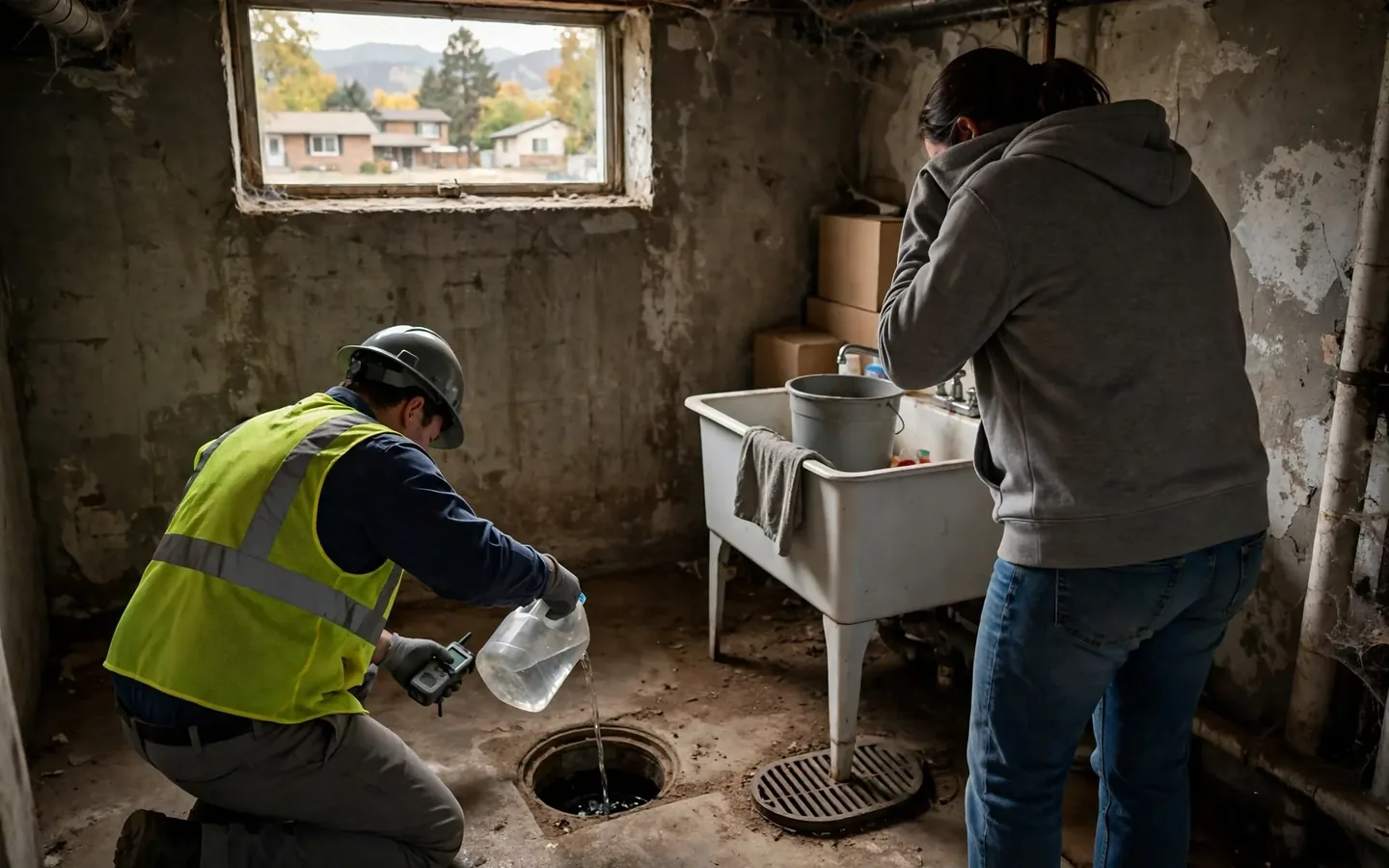
Every drain has a trap that holds water to block gas. If a drain is not used, that water evaporates.
Where this happens in Littleton homes:
- Basement floor drains
- Guest bathroom showers and sinks
- Laundry sinks
- Homes left empty during winter trips
Fix: run water into each drain for a minute. For floor drains, pour in a few cups of water. If the smell fades, you found it.
Dry, low humidity air along the Front Range can make traps dry out faster.
Cause 2: A Toilet Seal
A toilet sits on a wax ring. A worn ring or a loose toilet lets gas escape at the base.
Signs: smell near one toilet, a toilet that rocks, or water at the base.
Cause 3: A Blocked or Broken Vent
Vents let gas out through the roof. If a vent is blocked by debris, nests or snow and ice, gas can push through traps instead.
Signs: smell plus gurgling, or smell during strong winds.
Cause 4: A Cracked Drain or Sewer Line
This is where the sewer line comes in.
- Under the basement slab: a cracked cast iron drain can leak gas and moisture up through floor cracks
- In a crawlspace: a broken joint can fill the crawlspace with odor
- In the yard: a broken lateral can cause odors outside, often with a damp or extra green patch
Clue: a smell that stays even after all traps are filled, and is strongest in the basement or near the foundation.
Cause 5: Not the Sewer at All
- Water heater: a rotten egg smell only from hot water can come from the tank, not the drains
- Garbage disposal or sink drain: gunk inside the drain itself can smell
- Dead animal in a wall or crawlspace
A Step by Step Check
- Fill every trap, including floor drains
- Check each toilet for rocking or water at the base
- Notice if the smell is from hot water only
- Note whether the smell is stronger in the basement or outside
- If it persists, book a camera scope of the building drain and lateral
A smoke test, where harmless smoke is pushed into the drain system to see where it escapes, can also find hidden leaks.
Littleton Notes
- Older homes from the 1950s and 1960s often have cast iron drains under the slab that can crack with age
- Split levels in Columbine Hills and similar areas often have floor drains that are rarely used
- Winter vacations leave traps unused for weeks
Common Questions
Can a sewer smell come from my neighbor's line? Usually not into your house. Outdoor smells near the street can come from the district main. Report those to your district.
Will air fresheners solve it? No. They hide the smell while the cause remains.