
On this page8 sections
Cutting and jetting clear roots. Only sealing the pipe keeps them out. Every other method buys time.
That is the core of this guide. Below is how each option works and when it makes sense.
How Roots Get In
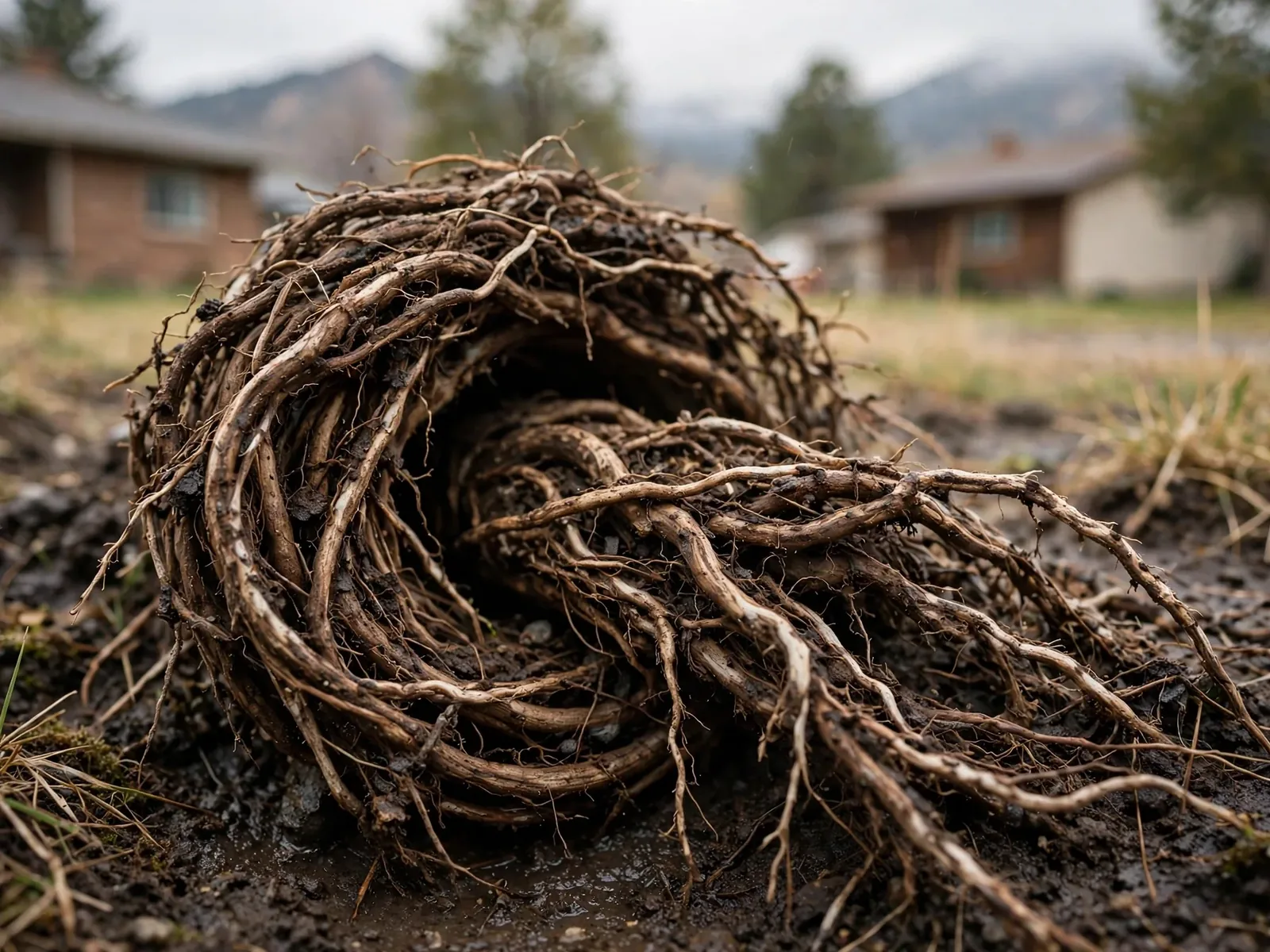
Roots do not usually break into solid pipe. They find an opening that already exists, such as a loose clay joint, a crack or a separated PVC joint, then grow inside where water and nutrients are steady. Over time they widen the gap.
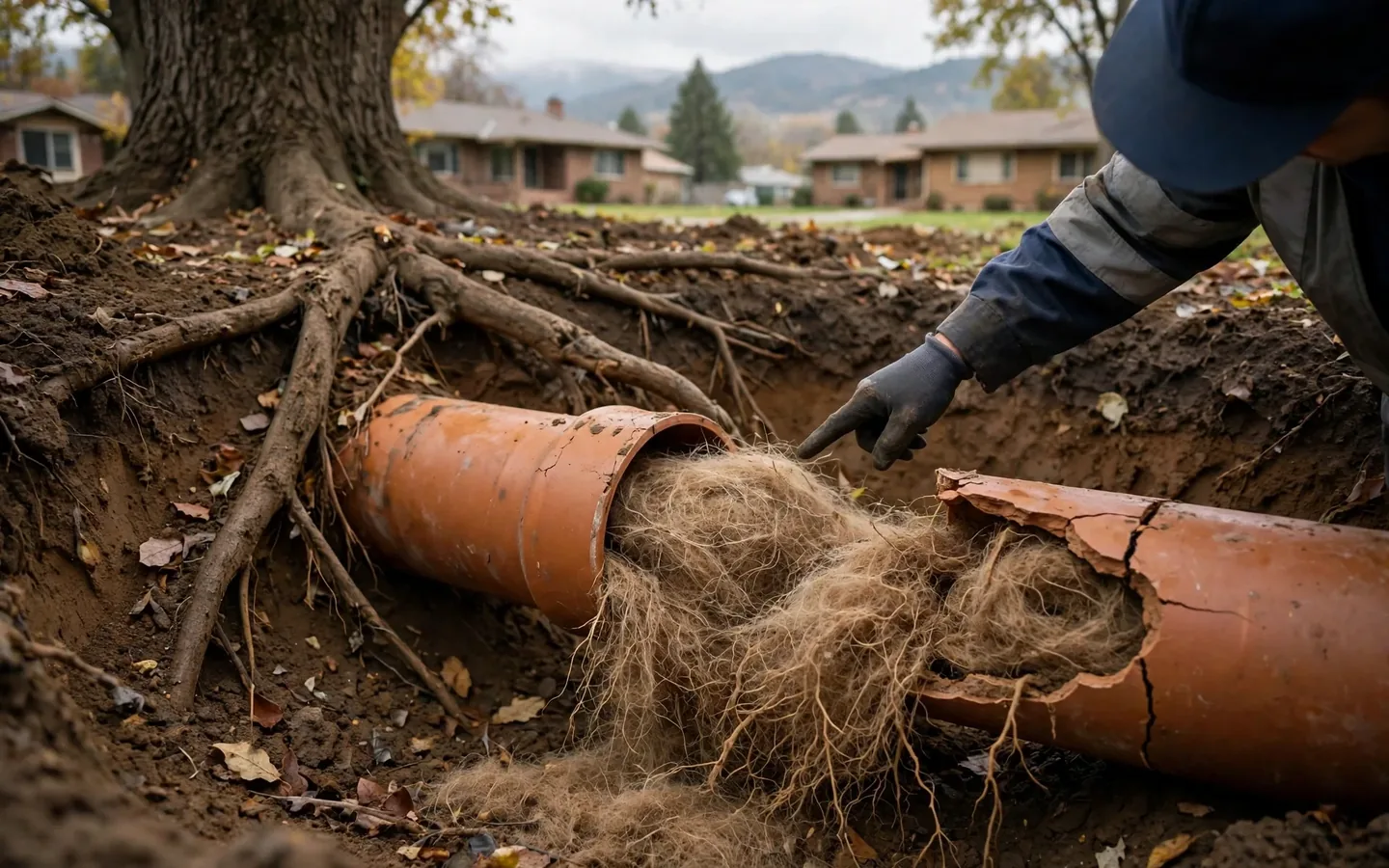
The U.S. EPA has described root intrusion as one of the most destructive problems facing sewer systems.
What dissolves tree roots in sewer lines?
Root control products can kill roots inside the pipe and slow regrowth, but they do not seal the joint. Roots tend to return until the opening is closed.
Option 1: Mechanical Cutting
A cable machine spins a cutting blade through the line.
- Good: fast, clears heavy root masses
- Limit: leaves root stubs in the joint that regrow
Option 2: Hydro Jetting
High pressure water cuts and flushes roots and debris.
- Good: cleans the whole pipe wall, helps the camera see entry points
- Limit: not for fragile pipe such as softened Orangeburg
Option 3: Root Control Products
Foaming or liquid products applied to the line.
- Good: can slow regrowth between cleanings
- Limit: does not fix the opening. Follow labels and district rules, and avoid products that can harm older pipe.
Option 4: Sealing the Pipe
Lining the pipe or replacing it.
- Good: closes the joints so roots cannot return
- Limit: costs more up front than a cleaning
A Sensible Order
- Clear the line
- Scope it to see where roots enter
- Decide: watch it, clean on a schedule or seal it
Rule of thumb: if you need root clearing more than once every year or two, sealing usually makes more sense.
Littleton Trees and Sewer Lines
- Ash trees make up about 15 percent of Littleton's trees, and emerald ash borer arrived in 2023. Removed ash trees leave dying roots near pipe.
- Cottonwoods and willows grow along the South Platte River and the High Line Canal and send roots far for water.
- Older neighborhoods such as downtown, Bow Mar and Columbine Valley have the oldest trees and oldest pipe.
Planting tip: keep new trees well away from the sewer path, and pick species with less aggressive roots.
Common Questions
Will copper sulfate fix roots? Some products use it, but rules vary and it does not seal joints. Ask your district before using any chemical in the sewer.
Do I need to remove my tree? Usually not. Sealing the pipe often lets you keep it.
Can roots crush a pipe? Roots growing outside the pipe can stress older, weaker pipe.