
On this page6 sections
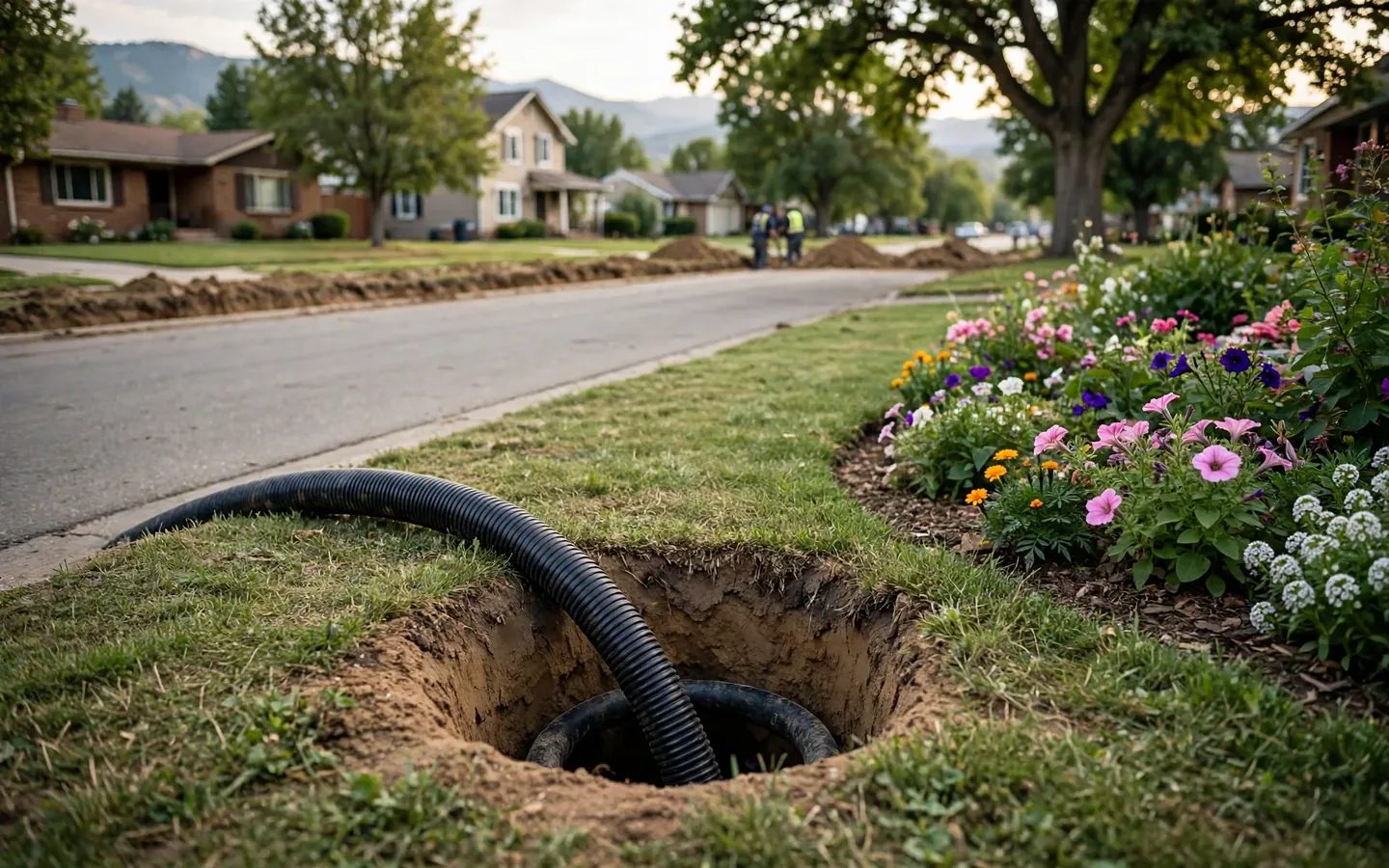
Trenchless methods replace or rebuild the pipe through small access points. Open trench digs along the whole line. Neither is always better. The camera scope decides which one fits your pipe.
The Three Main Methods
| Method | How it works | Best for |
|---|---|---|
| Lining (CIPP) | Resin liner cured inside old pipe | Cracks, root entry, pipe that holds its shape |
| Pipe bursting | New pipe pulled through as old pipe breaks | Broken pipe with a clear path |
| Open trench | Dig, remove, lay new pipe | Collapses, bellies, new routes |
The U.S. EPA describes trenchless rehabilitation as using the existing pipe as a host for a new pipe or liner.
Is trenchless always better than digging?
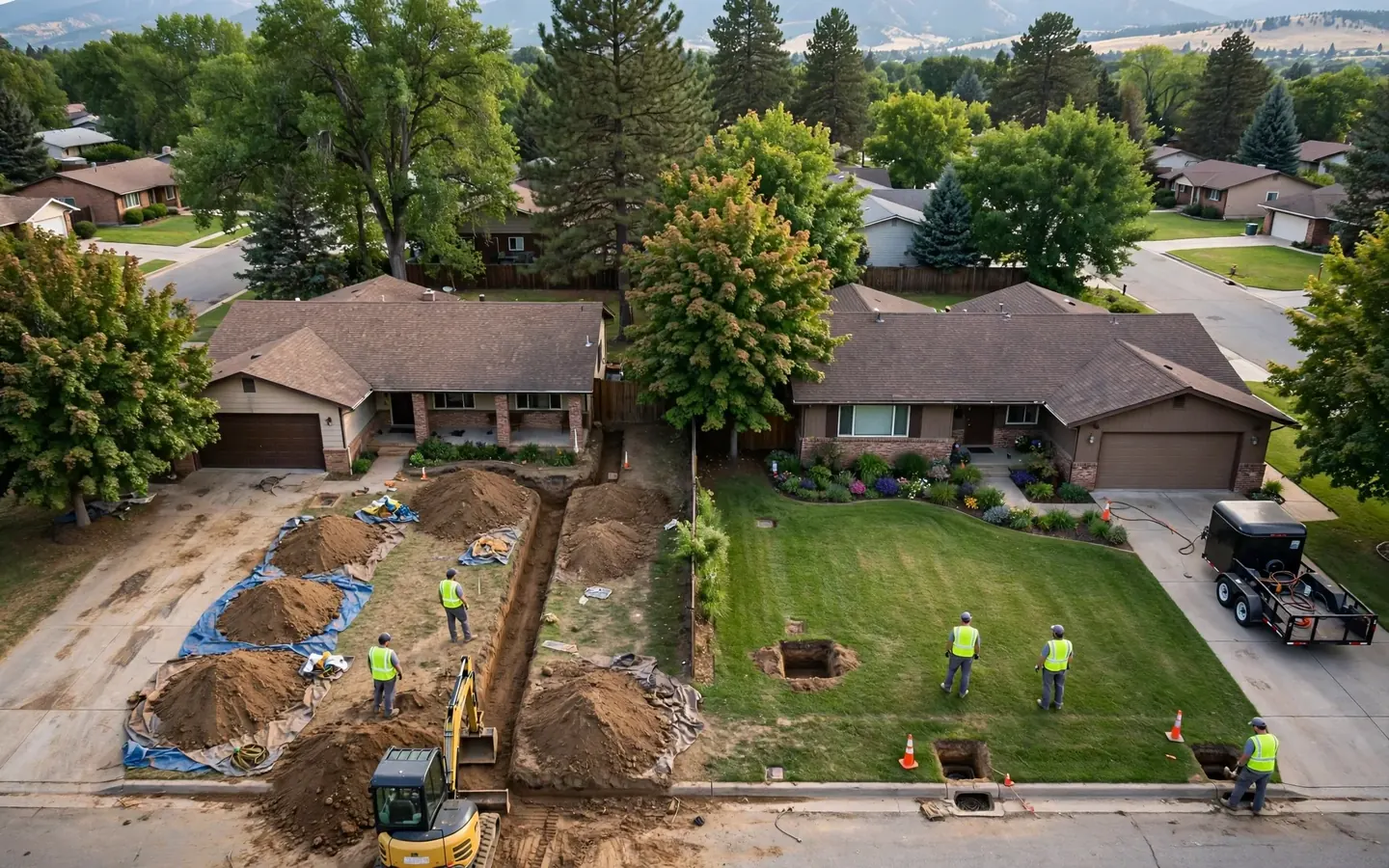
No. Trenchless follows the old pipe path. If the old path has a deep sag or a collapse, digging at least that section is usually the right fix.
Where Trenchless Wins
- Under driveways and patios you want to keep
- Under mature trees that a trench would damage
- Under the street, where digging means traffic control and extra permits
- Long lines on big lots in Bow Mar, Columbine Valley or Roxborough Park
Where Open Trench Wins
- Collapsed pipe that blocks a cable or liner
- A belly that holds water
- A line that needs a new route or new depth
- Shallow, short runs in open yard
Littleton Factors
Soil: swelling clay is common along the Front Range, and some areas have river gravel or rock. Rocky ground near Roxborough Park makes digging harder, which favors trenchless.
Frost: Littleton's building code uses a 36 inch frost depth. Open trench lets you reset depth if the old line is too shallow.
District rules: Valley Sanitation District requires licensing for liners that reach the main, and Columbine Water and Sanitation District has documented backups from liner ends sticking into the main. Lining must be done carefully at the tap.
Questions to Ask Any Contractor
- What did the scope show that rules out each method?
- How will you handle the connection at the main?
- Will I get before and after video?
- What restoration is included?
Common Questions
Does lining make the pipe smaller? Slightly, because the liner has thickness. Bursting can keep or increase size.
Which lasts longer? Design guides commonly accept about 50 years for a cured in place liner. New HDPE or PVC from bursting or trenching is also expected to last decades.
Can you mix methods? Yes. A spot dig at a belly plus lining for the rest is common.