
On this page8 sections
Only three things belong in a toilet: pee, poop and toilet paper. Wipes, paper towels and grease are behind a large share of household and street sewer clogs.
What a Sewer Study Found
In 2023, wastewater agencies and the wipes industry sorted more than 1,700 items pulled from sewage at two California treatment sites. The results:
| Item type | Share of items |
|---|---|
| Wipes labeled "Do Not Flush" (baby, cleaning, makeup wipes) | 34.1% |
| Other non flushable items (paper towels, period products, trash) | 64.9% |
| Wipes labeled flushable | 0.9% |
That means about 99 percent of the material should never have been flushed. The study also found that most "Do Not Flush" wipes were still fully intact.
Are flushable wipes safe for my sewer line?
Wipes labeled flushable made up less than 1 percent of debris in that study and were breaking apart. Many utilities still ask people not to flush any wipes. In an older Littleton line with roots or a sag, even small amounts can catch.
Why Wipes Cause Trouble in Older Lines
- Strong fibers: many non flushable wipes contain long, often plastic fibers made to stay strong
- Roots catch them: a single root at a clay joint can snag a wipe, then paper builds behind it
- Bellies hold them: a low spot lets wipes settle
- Liner ends and offsets: any lip in the pipe gives wipes something to hook on
Grease: The Other Half of the Problem
Fats, oils and grease are liquid when hot and solid when cool. Poured down a sink, grease coats the pipe and hardens.
Sources in a typical Littleton kitchen:
- Bacon and burger fat
- Pan drippings from holiday roasts
- Cooking oil
- Butter, sauces and dairy
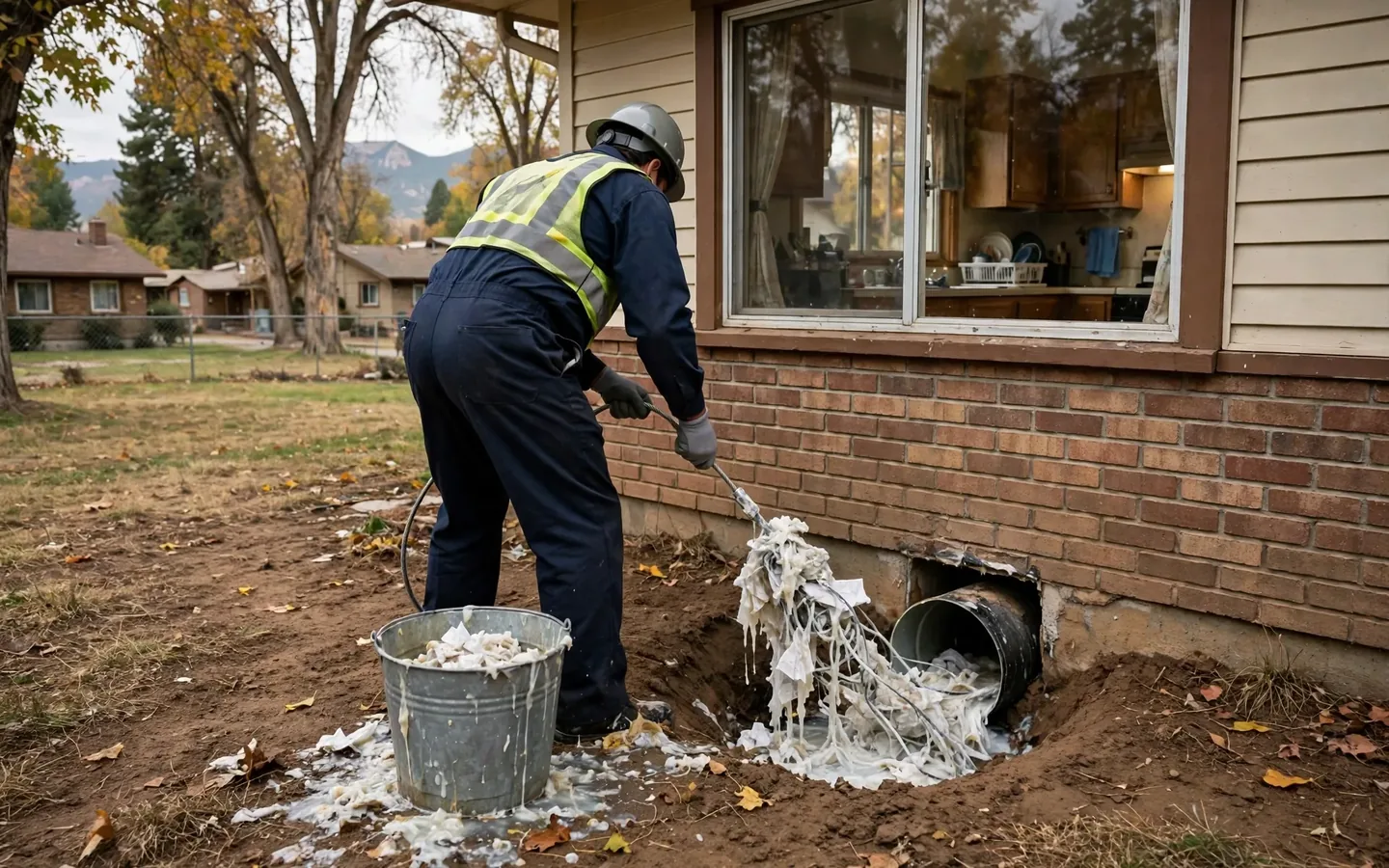
Grease plus wipes can form solid blobs in sewer systems. Utilities have pulled out huge masses of wipes and hardened grease from sewer pipes.
Simple Habits That Work
In the bathroom:
- Put a small trash can next to every toilet
- Throw away wipes, even ones labeled flushable
- Never flush paper towels, cotton balls, floss or period products
In the kitchen:
- Pour cooled grease into a can or jar and throw it away
- Wipe pans with a paper towel before washing
- Use a sink strainer to catch food scraps
- Run cold water with the disposal and do not overload it
Littleton Timing
- Holiday season: Thanksgiving through the new year brings heavy cooking and house guests
- Big events at home: gatherings during Western Welcome Week or summer barbecues add grease and paper
- Kids and wipes: households with young children often use more wipes
Your District Cares Too
Grease and wipes do not stop at your property line. Once in the district main, they can cause blockages that back up into several homes. Districts in the area, such as Valley Sanitation District, ask residents to be careful about what goes down the drain.
If You Already Have a Clog
- Stop flushing and running water
- Do not use chemical drain cleaners on a main line clog
- Call your sanitation district if several homes are affected
- Book main line clearing and a camera scope to see what caused it
Common Questions
Can hydro jetting remove grease? Yes. Jetting cleans grease off pipe walls. Changing habits keeps it from coming back.
Is the garbage disposal okay to use? In moderation. Do not put grease, fibrous scraps or large amounts of food down it.
Do septic rules apply here? Most Littleton homes are on public sewer. The same habits protect both.