
A standard home inspection checks the roof, furnace and foundation. It does not look inside the sewer line buried under the front yard.
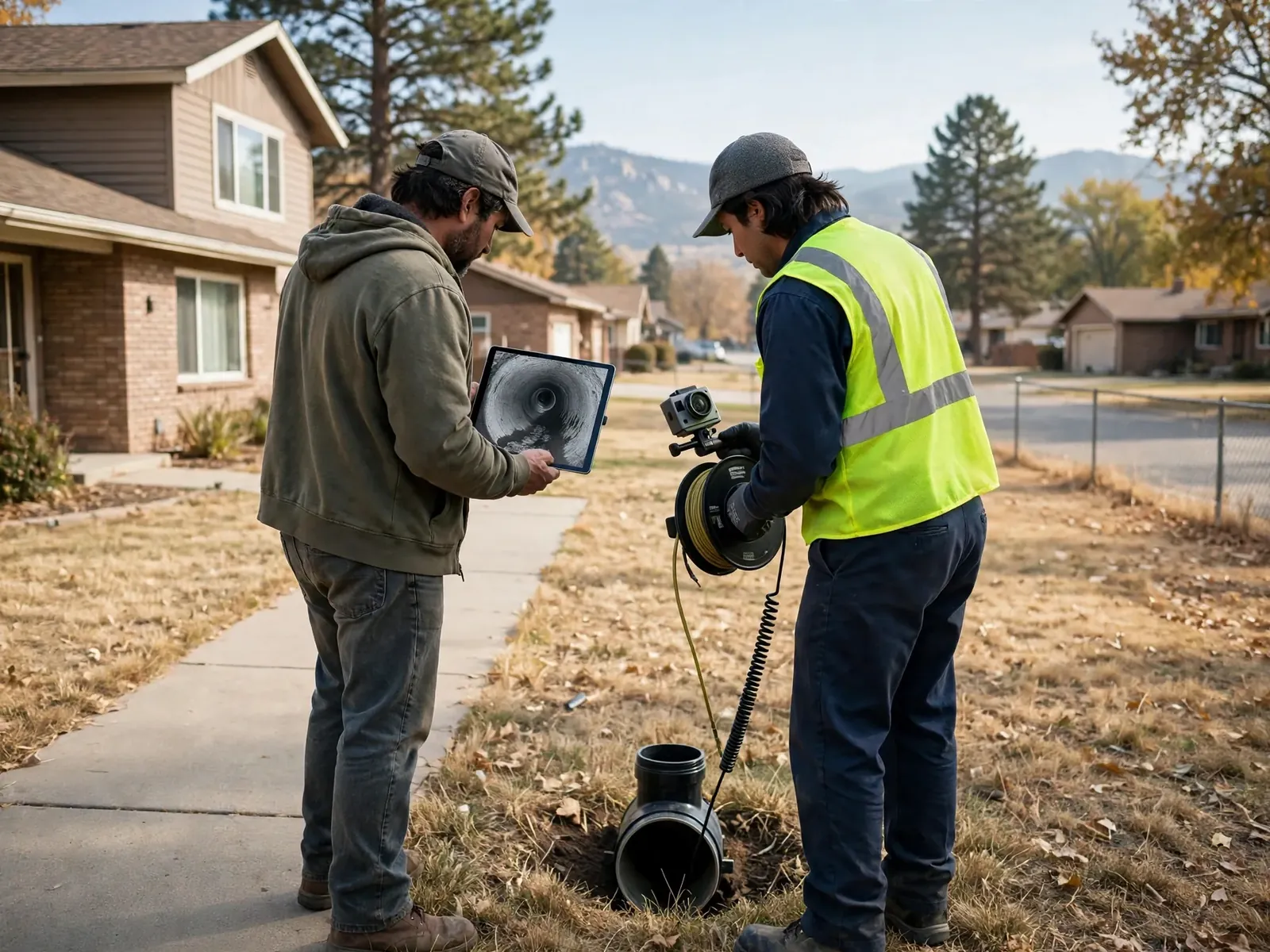
We run a waterproof camera through your line from the cleanout to the district main and record what it sees. You get the video and a plain language summary. Call (888) 888 8888 to schedule a scope anywhere in Littleton.
What is a sewer scope inspection?
It is a video inspection of the private sewer line between a house and the public main, done with a camera on a flexible cable.
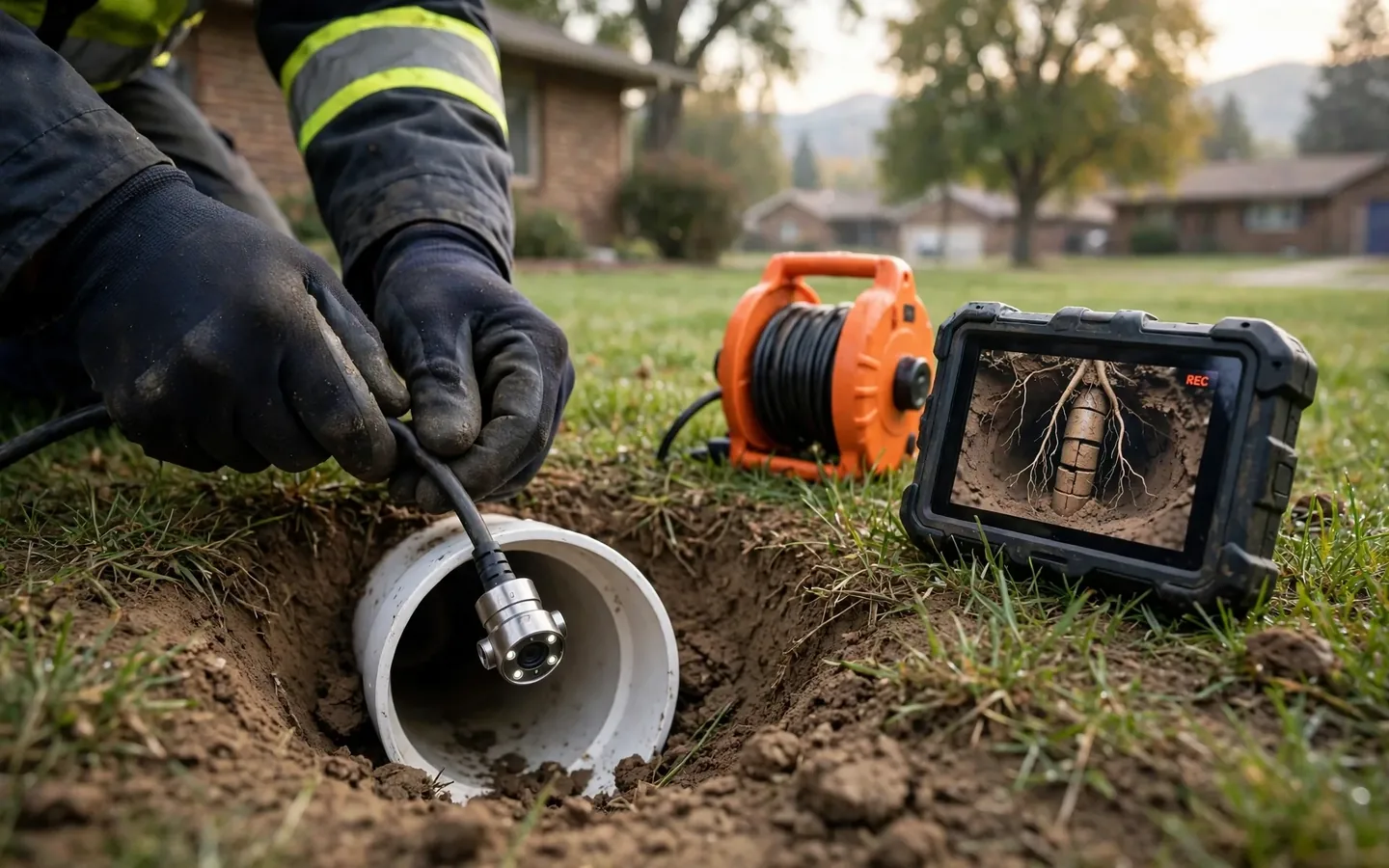
The camera shows the inside of the pipe. A locator on the camera head lets us mark the spot and depth of any problem from the surface.
What the Camera Finds
- Root intrusion at clay pipe joints
- Cracks and fractures in clay or cast iron
- Offsets, where one pipe section has shifted out of line with the next
- Bellies, low spots where water and waste sit
- Scale and corrosion inside cast iron
- Orangeburg pipe, the tar paper pipe used in some homes from the 1940s through the 1970s
- Grease and debris buildup
- Bad connections, including liner ends that stick into the district main
Is it worth doing a sewer scope inspection?
Yes, especially on older homes. The private line is the owner's responsibility in Littleton, including the section under the street, so the buyer inherits whatever the camera would have found.
Under Littleton City Code 7-5-24, the service line belongs to the property owner. Once you close, any repair is yours.
Buying a Home in Littleton?
Schedule the scope during your inspection window, while you can still negotiate. With a video in hand you can:
- Ask the seller to repair the line before closing
- Ask for a credit
- Walk away if the damage is severe
- Close with confidence when the line is clean
Homes we most often recommend scoping before purchase:
- Historic Downtown Littleton (80120): some homes date to the 1910s and 1950s
- Columbine and Columbine West (80123, 80128): many 1960s and 1970s homes with clay pipe
- Cherry Knolls (80121): 1960s to 1990s ranch homes under mature trees
- Any home with large trees between the house and the street
Newer Highlands Ranch homes, built from 1981 on, mostly have PVC. A scope there still catches sags and separated builder joints.
Can a plumber do a scope?
Yes. Plumbers and sewer specialists perform scopes, and so do some home inspectors. A sewer specialist can also explain what repair the video points to.
How often should you scope your sewer line?
Scope before buying a home, after any sewage backup, after removing a large tree near the line, and every few years on older clay or cast iron lines with a root history.
Removing trees is a real trigger in Littleton right now. Emerald ash borer was found here in 2023, and many residents are taking down ash trees. Stump grinding and decaying roots can disturb old pipe.
What You Get
- Full video recording from the cleanout to the main
- Marked problem spots with approximate depth and distance from the house
- Pipe material identified along the run
- A plain summary of what we saw and what it means
- Repair options if anything needs attention, with no pressure to decide that day
What Happens If the Scope Finds Damage?
- Roots only, pipe sound: cutting and jetting, then a plan to seal the joint
- One bad section: a spot repair
- Cracked but round pipe: lining may fit
- Sag, collapse or Orangeburg: replacement
Repairs that reach the street need a City right-of-way permit, and some districts inspect work at the connection.
What Happens on the Day
- The technician finds your cleanout, or another way into the line, such as a toilet flange or roof vent.
- A camera on a flexible cable is pushed down the line toward the district main.
- Defects are recorded by their distance from the access point: roots, cracks, offsets, sags and the pipe material.
- You watch the video with the technician and ask questions on site.
- You get a copy of the video and a short written summary to keep.
What the Report Includes
- Pipe material along the line, and where it changes
- Each defect with its footage marker
- Photos of the worst spots
- Whether the line is clear to the main
- Recommended next steps, if any; see how to read your report
What Affects the Cost
Every line is different, so a fair price comes after a camera scope, not before. These are the things that move the number up or down:
- Access: an outdoor cleanout is fastest; pulling a toilet adds time.
- Length of the line: longer lines take longer to scope.
- Cleaning first: a heavily clogged line may need clearing before the camera can pass.
- Locating: marking the pipe's path and depth on the surface is often an add on.
Quick Answers
Do you need a cleanout? It is the easiest way in. If your home does not have one, we can access the line another way or install one.
How long does a scope take? Most residential scopes are done in one visit.
Can I watch? Yes. Many homeowners watch the screen live.
Is the video yours to keep? Yes. Share it with your realtor, the seller or another contractor.
Schedule Your Scope
Call (888) 888 8888 to book a sewer camera inspection anywhere in Littleton, from Bow Mar to Roxborough.