
On this page8 sections
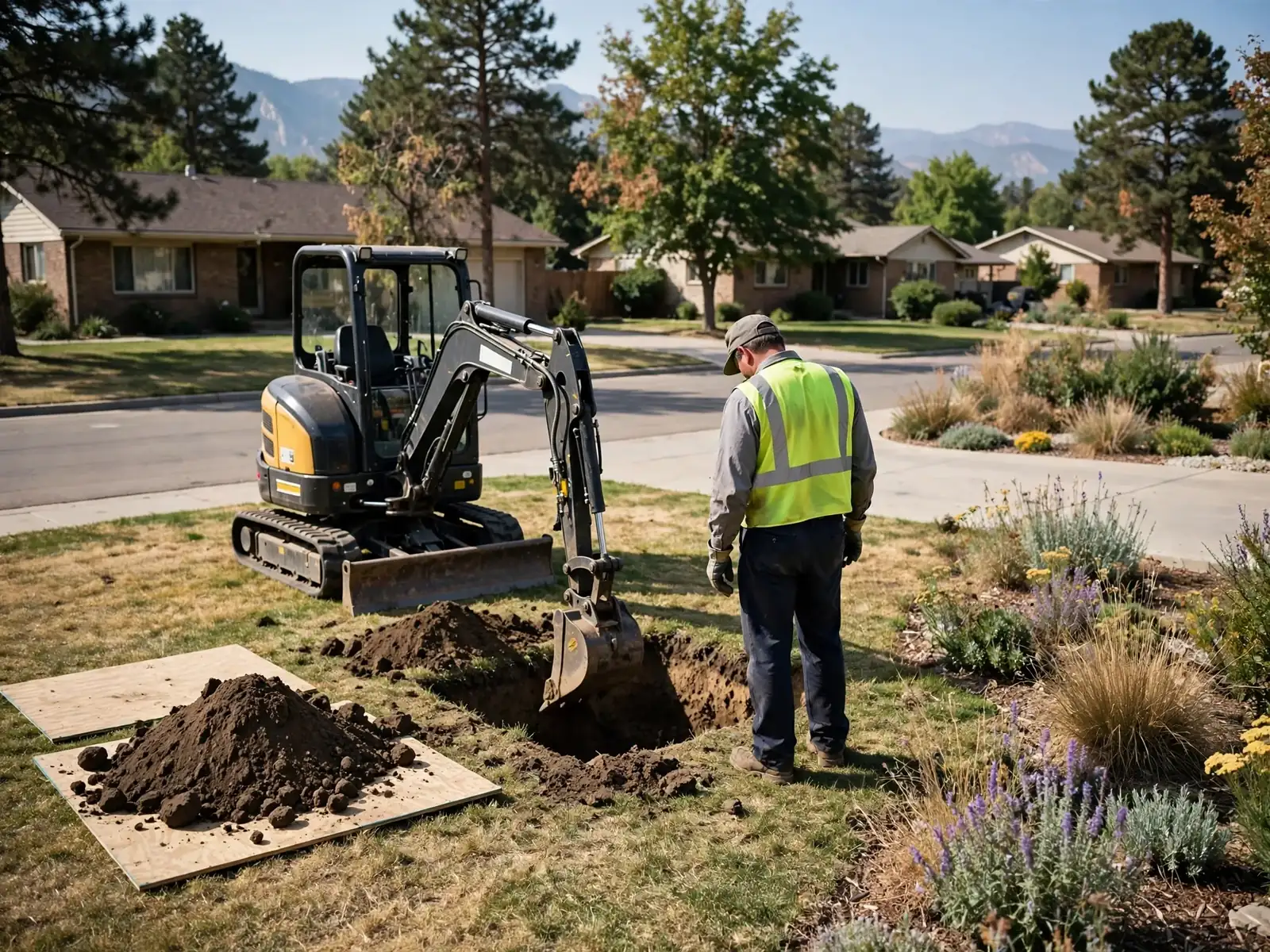
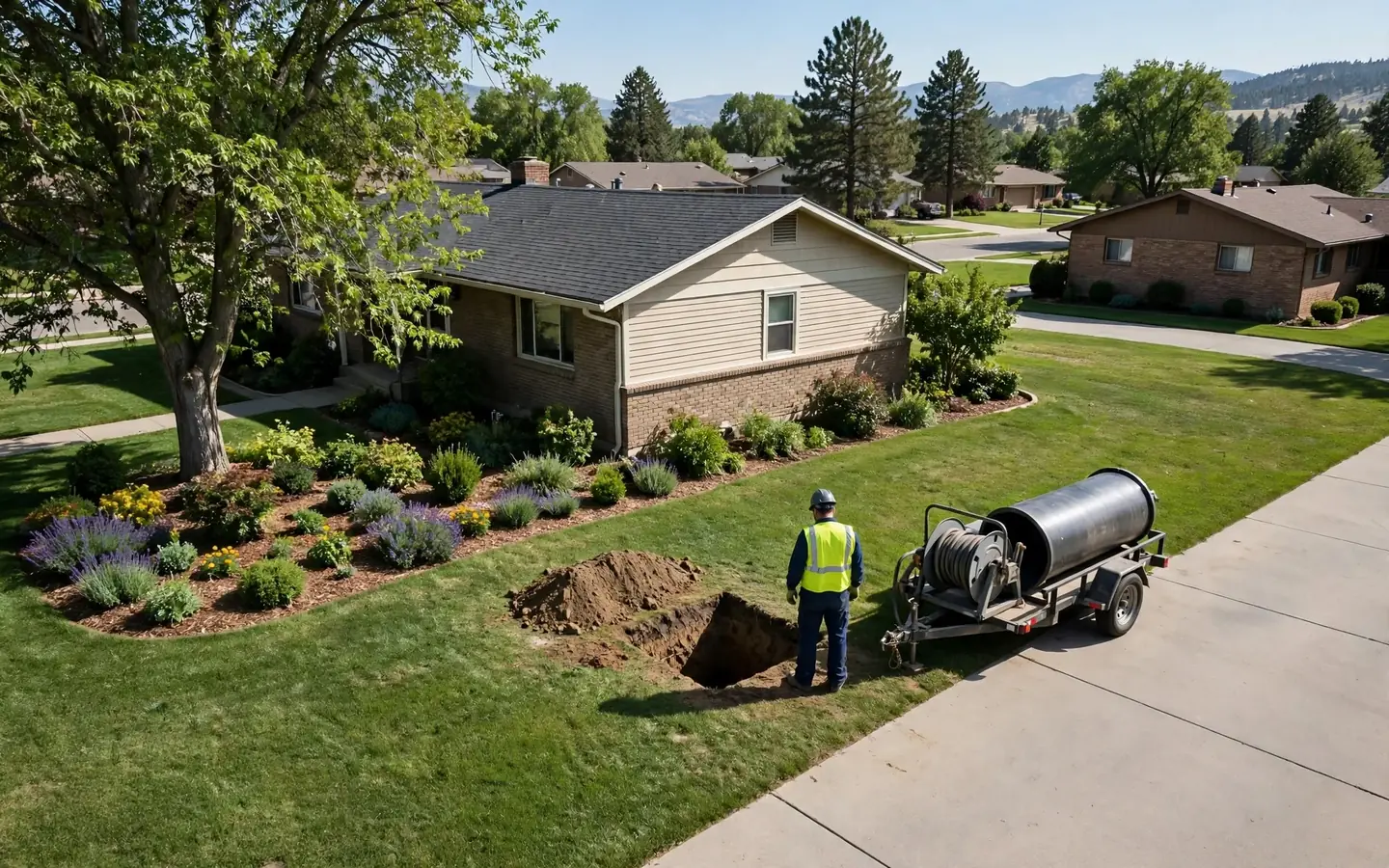
A mature silver maple shading the front yard. A stamped concrete driveway. A garden you spent ten summers building. When the sewer line runs under all of it, digging a trench end to end is the last thing you want.
Trenchless methods rebuild or replace the pipe through small access points. We offer both main types across Littleton, from Ken Caryl to Southglenn. Call (888) 888 8888 to find out if your line qualifies.
The Two Trenchless Methods
Cured in place pipe lining (CIPP)
A flexible tube soaked in resin goes into the old pipe through a cleanout. It is inflated against the old pipe walls and cured until it hardens. The result is a new, jointless pipe inside the old one.
Best for: cracked clay, root damaged joints and corroded cast iron that still keeps its round shape and slope.
Pipe bursting
A cone shaped bursting head is pulled through the old line from one pit to another. It breaks the old pipe outward and pulls a new HDPE pipe in behind it, fused into one continuous length.
Best for: full replacement along the same path when the old pipe is too damaged to line but the route and slope still work.
Is Your Littleton Sewer Line a Good Fit?
A line is a good trenchless candidate when it still runs downhill the whole way and the camera can pass through it.
Trenchless is usually not the answer when the camera shows:
- A belly. A liner follows the same low spot, so waste keeps settling there.
- A full collapse. The liner needs an open path, and the bursting head needs a pipe to follow.
- A line that must move. If the route goes under a new addition or needs a new connection point, an open trench is the better choice.
Swelling clay soil common along the Front Range is one reason bellies form, so we always check slope on camera before we recommend lining.
What are the disadvantages of trenchless pipe lining?
A liner cannot fix a sag or a collapse, it slightly narrows the inside of the pipe, and side connections must be reopened carefully after it cures.
That last point matters in Littleton. Columbine Water and Sanitation District has reported sewer backups in its mains caused by customer lined service lines with taps that stuck out into the main. A protruding liner end acts like a dam in the district pipe.
How we handle it: we trim the liner flush at the connection, scope it again, and keep the video for the district inspection.
Is trenchless sewer repair worth it?
Yes, when the pipe qualifies. It protects landscaping and hardscape, often finishes faster than a trench, and leaves a joint free pipe that roots cannot enter.
Protecting Littleton's Trees
Littleton's older neighborhoods are known for big shade trees, and roots are the top reason those sewer lines fail. Emerald ash borer was found in Littleton in 2023, and the City reports roughly 15 percent of local trees are ash. Many homeowners are now deciding which trees to treat and which to remove.
Trenchless work lets you keep healthy trees in place while sealing the pipe their roots were entering. If you do remove a large tree near the line, schedule a scope afterward. Stump grinding and root decay can disturb old clay pipe.
What a Trenchless Job Looks Like
- Camera scope. We check shape, slope and every connection.
- Cleaning. Roots and scale are cut out and the pipe is jetted clean so the liner bonds or the bursting head runs true.
- Colorado 811 and permit. Utilities are marked and the district permit is filed. Repairs or replacements that reach the street need a City right-of-way permit.
- Install. The liner is inverted and cured, or the new pipe is pulled through.
- Reopen connections. Side branches are reopened and the tap end is finished flush.
- Final video. You get a recording of the finished pipe.
Where Trenchless Helps Most in Littleton
- Ken Caryl and Dakota Ridge (80127): sloped lots near Deer Creek Canyon Park with landscaped yards.
- Bow Mar and Columbine Valley (80123): large lots and long service lines under mature trees.
- Southglenn (80122): driveways and shared townhome walkways close to the line.
- Historic Downtown (80120): older clay and cast iron under established yards near Main Street.
What Affects the Cost
Every line is different, so a fair price comes after a camera scope, not before. These are the things that move the number up or down:
- Method: lining and pipe bursting differ in equipment and materials.
- Pipe condition: a collapsed or badly offset pipe may rule out lining.
- Access pits: bursting needs a pit at each end; lining often works from the cleanout.
- Length and diameter: more pipe means more liner or more new pipe.
- Reopening branch lines: every connection inside the pipe must be cut open after lining.
- Compared with digging: trenchless can cost more on paper, but often saves on restoring driveways and yards; see trenchless or open trench.
Quick Answers
How long does a liner last? Cured in place liners are made to function as a new pipe for decades. The camera report after installation is your baseline.
Do you still dig at all? Usually one or two small pits, or none for lining through an existing cleanout.
Can trenchless go under the street? Often, yes, which avoids cutting the pavement. A right of way permit may still be required.
Will roots grow through a liner? A cured liner has no joints, so roots have no gap to enter.
Find Out If Your Line Qualifies
The camera decides, not a sales pitch. Call (888) 888 8888 to book a scope and see your pipe for yourself.