
On this page8 sections
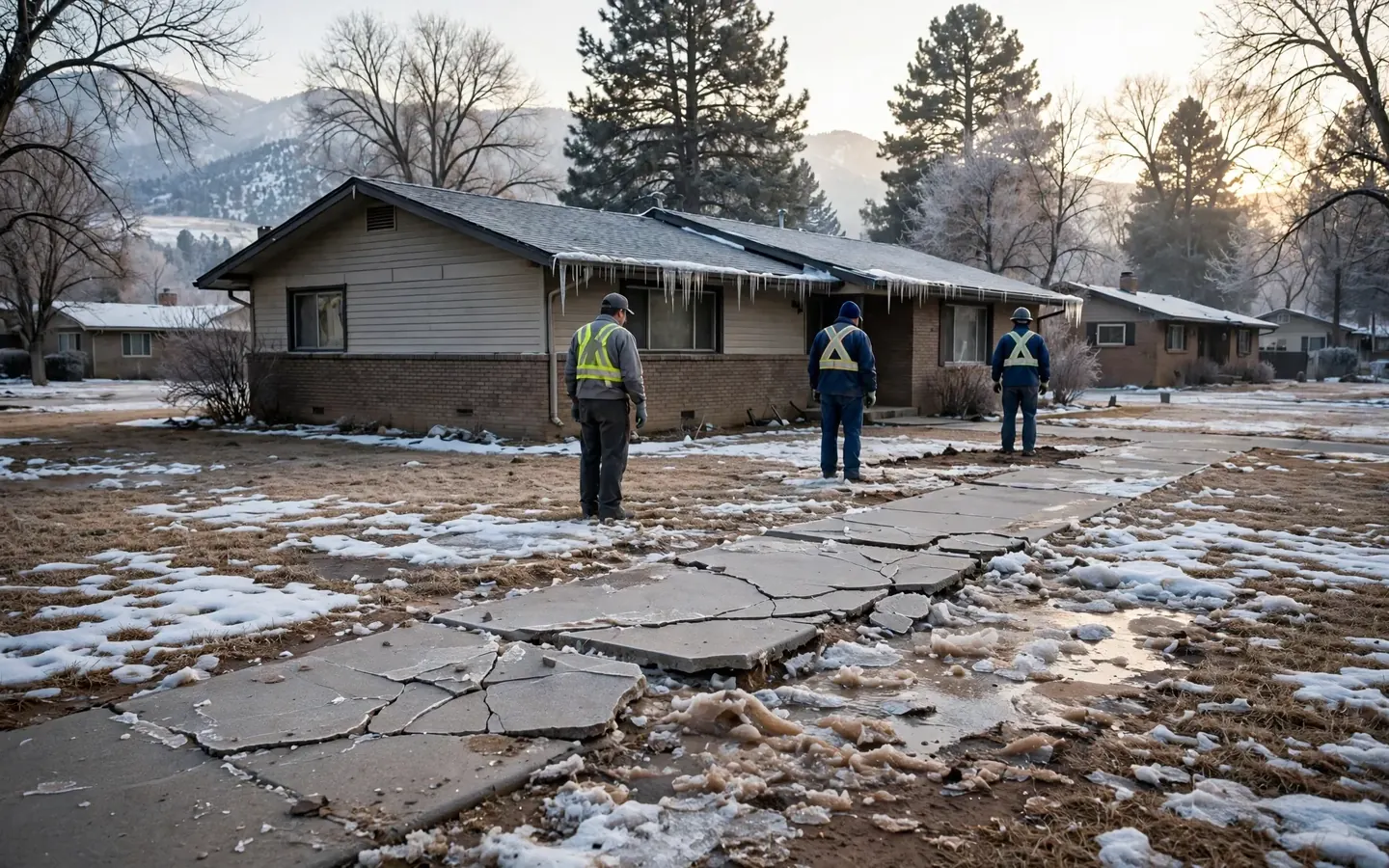
Littleton's biggest cold weather risk to sewer pipes is not one deep freeze. It is the back and forth: ground that freezes overnight and thaws by afternoon, again and again, from fall into late spring.
The Front Range Freeze Pattern
The Denver metro area, including Littleton, freezes often but rarely stays frozen. Nighttime lows can reach 32°F or colder in all but three months of the year. Yet only about 21 days a year have highs that stay below freezing.
That means many nights below freezing followed by days above it. Each swing moves water in the top layer of soil between ice and liquid.
The average last spring freeze in Denver is around April 28, though in 2022 the last one came on May 21.
Can freezing weather damage a sewer line?
Yes, mainly where pipe is shallow or exposed. Frost can push soil upward and shift pipe sections, and water standing in a sag can freeze in a long cold snap. Deep, well bedded pipe is rarely affected.
Frost Depth in Littleton
The City of Littleton's building code uses a 36 inch frost depth. Pipe below that line sits in ground that should not freeze in a normal winter. Pipe above it can be affected.
Where shallow pipe shows up:
- Older laterals laid before current codes
- Sections where a yard was regraded and soil was removed
- Pipe passing through crawlspaces or under unheated garages
- The riser at an outdoor cleanout
How Freeze and Thaw Moves Pipe
- Water fills small gaps in soil around the pipe
- It freezes and expands, lifting soil a little
- It thaws, and soil settles back, but not always to the same spot
- Over many cycles, rigid joints shift out of line
Clay soil makes this worse. The Colorado Geological Survey calls expansive soil Colorado's most significant geologic hazard, causing more property damage than any other natural hazard. Wet clay that also freezes and thaws moves even more.
Pipes Most at Risk
- Clay pipe with many short joints
- Cast iron with rusted hubs
- Orangeburg that has already softened
- Any pipe with a belly, where standing water can freeze
PVC and fused HDPE handle movement better, though PVC joints can still separate.
Signs Freeze and Thaw Is Affecting Your Line
- Backups that start in late winter or early spring
- Slow drains after a hard freeze that clear up when it warms
- A camera showing new offsets where the pipe used to be straight
- A cracked cleanout riser or cap
Protecting Your Line
Before winter:
- Insulate any drain pipe in a crawlspace or garage
- Check that the outdoor cleanout cap is solid
- Fix leaks, since water around pipe freezes and moves soil
During cold snaps:
- Keep heat on, including in vacant homes
- Use drains normally. Regular warm water flow helps
- Do not pour boiling water into pipes
When repairing or replacing:
- Set new pipe below the 36 inch frost depth where possible
- Bed pipe on compacted, stable material
- Use pipe with fewer or no joints
Winter Repairs
Frozen ground slows digging but does not stop it. Trenchless methods such as pipe lining and pipe bursting need only small access points, which helps when the ground is hard. Colorado 811 locates are still required at least three business days before digging.
Common Questions
Is a frozen sewer line common in Littleton? Not common. Most trouble comes from shifting soil, not ice inside the pipe.
Should I leave a faucet dripping for the sewer line? That is for water supply pipes. A slow drip into a drain with a sag can actually freeze in place.
When do freeze related problems show up? Often in late winter and spring, after many cycles.