
On this page8 sections
A good sewer scope report tells you three things for every problem: where it is (in feet from the start), what it is (crack, root, sag, offset) and how bad it is. If a report cannot answer all three, ask for more before you sign anything.
Most Littleton homeowners get a scope after a backup or before buying a home. The video is long and the report can look like code. Here is how to read it.
Part 1: The Header
Check these basics first:
- Address and date
- Start point: usually the cleanout, a roof vent or a pulled toilet
- Direction: toward the street (downstream) or toward the house (upstream)
- Pipe size and material: often 4 inch clay, cast iron, Orangeburg or PVC
- Total length scoped: did the camera reach the district main?
Red flag: a report that stops at 30 feet on a 70 foot lateral. Ask why the camera stopped.
Part 2: Footage Markers
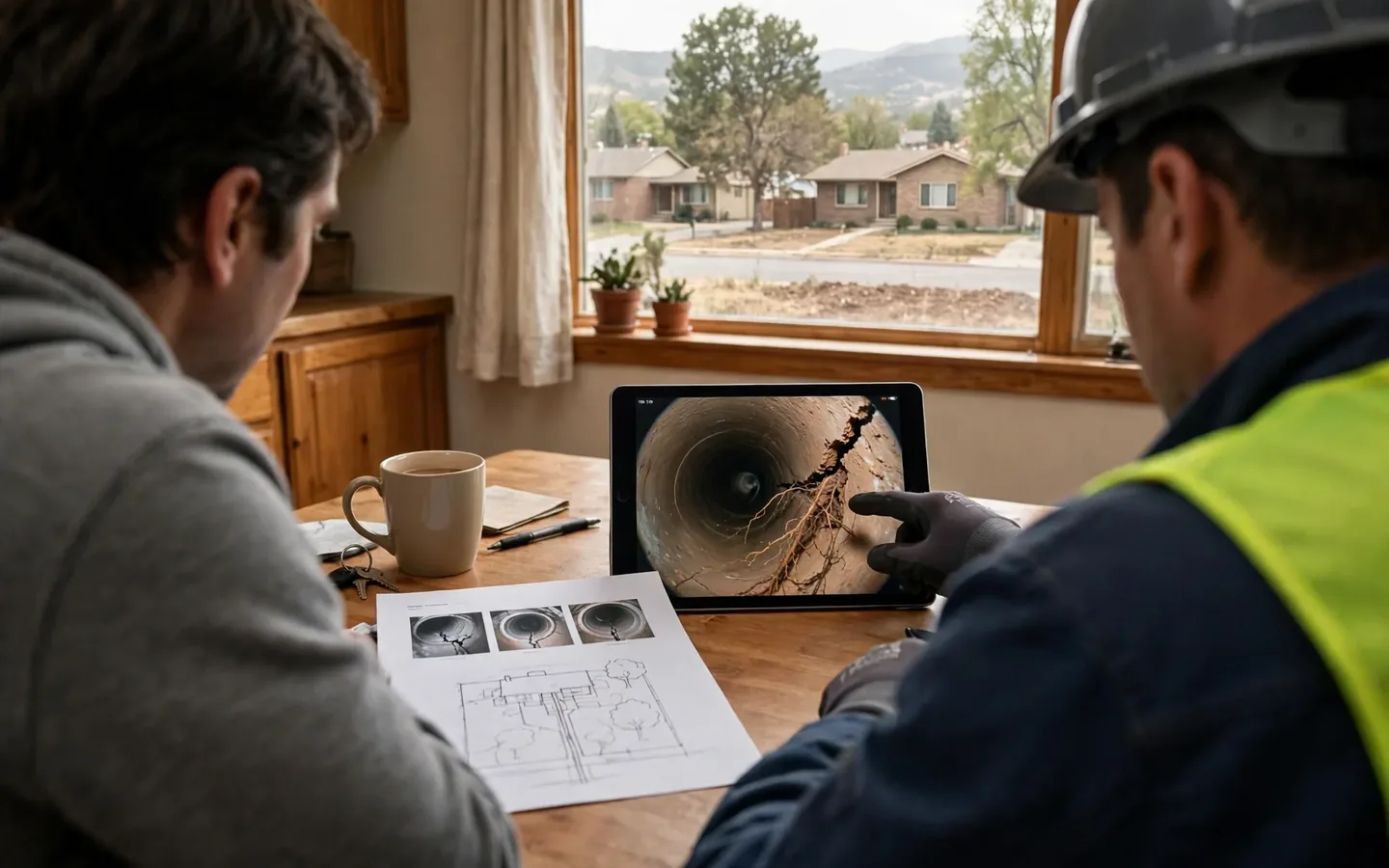
Every finding should have a distance, such as "root intrusion at 34 feet." That number tells a crew where to dig or where a liner must reach.
Tip: ask for the distance of each defect from the cleanout and from the foundation. On long Littleton lots, such as in Bow Mar or Roxborough Park, that difference matters.
Part 3: Defect Codes and Grades
Many professional reports use NASSCO's Pipeline Assessment Certification Program, called PACP. It is the North American standard for coding sewer defects. Each defect gets a grade from 1 to 5.
| Grade | Meaning in plain words |
|---|---|
| 1 | Minor |
| 2 | Minor to moderate |
| 3 | Moderate |
| 4 | Significant |
| 5 | Most significant |
What does a grade 5 on a sewer report mean?
It marks the most serious kind of defect, such as a collapse or a large hole. It does not say exactly how long the pipe will last, but grade 4 and 5 findings usually need a repair plan.
NASSCO notes that a pipe's overall rating depends on both the grades and how many times each grade appears. Five holes is worse than one, even if each hole has the same grade.
Not every residential report uses PACP. Many use plain words instead. That is fine if each finding still has a location and a clear description.
Part 4: Common Findings Decoded
| You see | What it means | Usual next step |
|---|---|---|
| Roots at joint | Roots entering through a gap | Clear, then seal or replace |
| Longitudinal crack | Crack along the pipe | Watch if minor, line if spreading |
| Offset joint | One section shifted | Line if small, dig if large |
| Belly or sag, water held | Low spot | Spot dig if causing clogs |
| Deformed pipe | Pipe out of round | Often Orangeburg, usually replace |
| Broken or hole | Pipe wall missing | Repair soon |
| Grease or deposits | Buildup inside | Hydro jetting |
| Protruding tap or liner | Something sticking into the flow | Trim and recheck |
Part 5: The Video
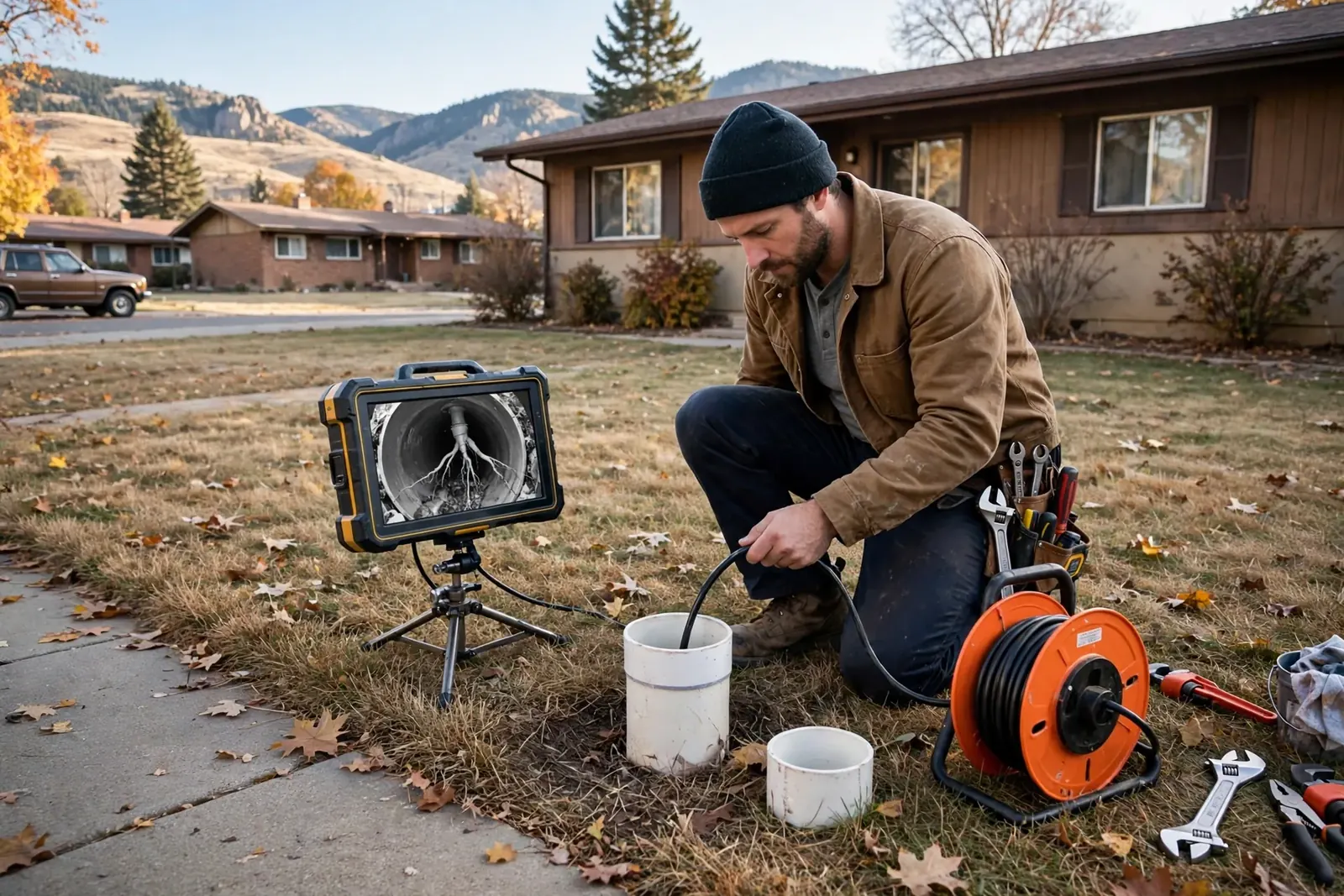
Always ask for the full video file, not just stills.
- Watch for the camera dipping into water, which shows a belly
- Look for clear water running in from the sides, which shows groundwater getting in
- Note where the camera jolts at a joint, which can mean an offset
Questions to Ask About Your Report
- Did the camera reach the district main?
- Which defects are urgent and which can wait?
- Could a spot repair handle this, or does the whole line need work?
- Will lining work, given the shape and slope you saw?
- Can I get a second look from another company with this same video?
Littleton Specific Notes
- Your sanitation district may ask for video with an emergency permit application, per the City of Littleton.
- If you are buying a home, keep the video for your inspection objection deadline.
- Homes from the 1950s to early 1970s often show clay, cast iron or Orangeburg on video.
Common Questions
Is a sewer scope report the same as a home inspection? No. Most home inspections do not look inside the sewer line.
Should I get a second opinion on a big repair? Yes. The same video can be reviewed by another company.