
On this page7 sections
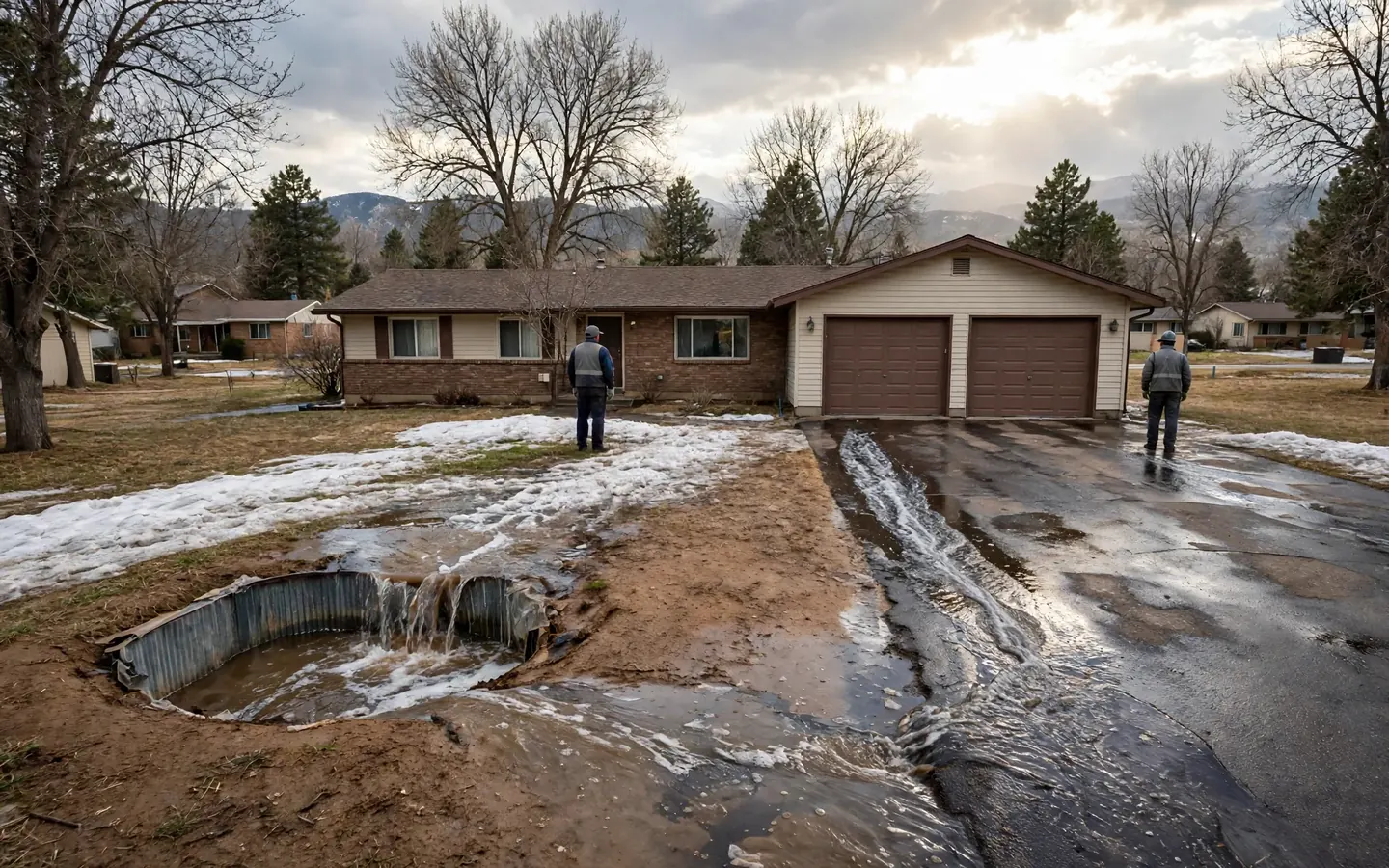
Heavy spring snow is followed by fast melting. That meltwater soaks the soil around buried pipe, swells clay, raises groundwater and finds its way into cracked sewer lines. Many Littleton sewer calls in April and May trace back to March snow.
March Is the Snowiest Month
March is Denver's snowiest month, averaging 8.8 inches based on 1990 to 2020 normals. Some years bring far more.
- March 17 to 19, 2003: 31.8 inches fell in Denver, the second biggest storm in city records. The storm dropped about 50 inches near Golden and 40.3 inches in Aurora.
- March 13 to 14, 2021: 27.1 inches fell at the airport, the city's fourth largest snowstorm.
- March 13 to 14, 2024: a powerful storm brought heavy snow to the Front Range. Foothills from Boulder through Jefferson County saw their biggest snow since 2003.
Both the 2003 and 2021 storms came after long dry spells. The 2003 blizzard broke 19 straight months of below normal precipitation in Denver.
Why do sewer problems show up after a big snow?
Melting snow soaks the ground. Water seeps into cracked pipe and loose joints, and swelling clay soil pushes on the pipe. Both can turn a small defect into a backup.
What Snowmelt Does Underground
1. Raises groundwater Saturated soil pushes water into any crack or open joint. Sewer agencies call this infiltration, and they list snowmelt and high groundwater as common causes.
2. Swells clay soil The Colorado Geological Survey explains that expansion is mostly caused by wetting dry clay. A big snow after a dry winter is exactly that.
3. Overloads the main Extra water entering many laterals adds up in the district main.
4. Feeds roots Spring moisture and warming soil kick off root growth right where pipe joints leak.
The Dry Then Wet Problem
Littleton often swings from dry to soaked. When dry clay shrinks, it can leave gaps around pipe. Then a big March snow melts, the clay swells back, and the pipe gets pushed.
Pipes that suffer most:
- Short section clay pipe with many joints
- Pipe on loose fill in newer subdivisions
- Pipe already offset from past movement
Warning Signs in Spring
- Slow drains that start a week or two after a big melt
- Basement floor drain gurgling
- Damp spots or a sinking strip over the sewer path
- Backups that ease as the ground dries in summer
Before and After a Big Snow
Before:
- Find your cleanout and mark it with a stake so you can find it under snow
- Make sure downspouts point well away from the house
- Scope the line if you have had spring backups before
After:
- Shovel snow away from the foundation and the cleanout
- Watch the lowest drains as it melts
- Do not pile snow from the driveway over the sewer path
Access in Deep Snow
A crew needs to reach your cleanout. Clear a path, and tell the dispatcher if the cleanout is under a drift. Trenchless repair methods need only small openings, which helps when the yard is snow covered.
Common Questions
Will snowmelt cause a backup if my pipe is in good shape? Usually not. Sound pipe with tight joints keeps groundwater out.
Does the district main back up during snowmelt? It can if many homes let water in. Call your district first during any backup.
Is spring a good time to scope? Yes. Problems caused by winter movement are fresh and easy to see.